- By Admin
- Floor
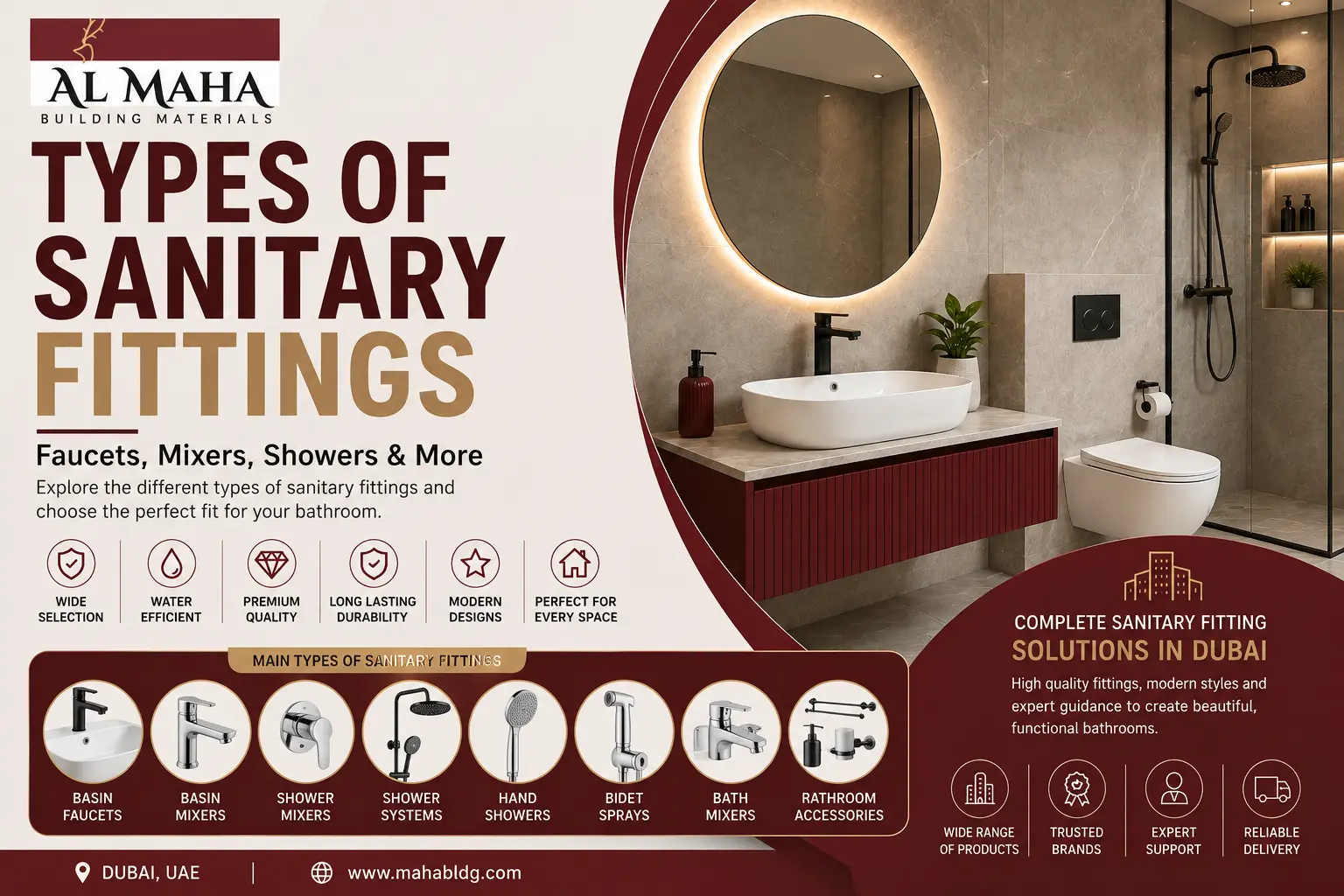
Types of Sanitary Fittings: Faucets, Mixers, Showers & More
Sanitary fittings are an essential part of every functional bathroom. From controlling water flow at the basin to providing comfortable showering, the right fittings combine practicality, durability, and design.
With many options available today, choosing between faucets, mixers, showers, bath fittings, and other bathroom fixtures can be confusing.
This guide explains the different types of sanitary fittings, their applications, and what to consider before choosing them for a residential or commercial bathroom in Dubai.
What Are Sanitary Fittings?
Sanitary fittings are fixtures used to control, deliver, or manage water in bathrooms and other sanitary areas.
Common examples include:
Faucets
Basin mixers
Shower mixers
Hand showers
Rain showers
Bath mixers
Bidet sprays
Diverters
Shower systems
Bathroom accessories
Sanitary fittings are different from sanitary ware. Sanitary ware generally includes products such as toilets, wash basins, and bidets.
For a complete bathroom project, both categories need to work together.
You can explore Al Maha's sanitary ware range in Dubai for complementary bathroom products.
1. Basin Faucets
Basin faucets are among the most common bathroom fittings.
They control the flow of water from a bathroom basin and are available in several styles.
Common types include:
Single-handle faucets
Two-handle faucets
Pillar taps
Tall basin faucets
Wall-mounted faucets
Where are they used?
Basin faucets are suitable for:
Residential bathrooms
Guest bathrooms
Commercial washrooms
Hotels
Offices
Retail facilities
When selecting a basin faucet, consider the basin's dimensions, mounting configuration, spout reach, and overall bathroom design.
2. Basin Mixers
A basin mixer combines hot and cold water through a single fitting.
Unlike traditional separate taps, a mixer allows the user to control temperature and water flow from one unit.
Benefits include:
Convenient temperature control
Modern appearance
Easy operation
Wide range of designs
Compatibility with contemporary bathrooms
Basin mixers are particularly popular in modern residential and hospitality bathrooms.
3. Shower Mixers
Shower mixers regulate water temperature and flow in a shower.
They can be exposed or concealed depending on the bathroom design.
Common shower mixer types:
Manual shower mixers
Thermostatic mixers
Concealed mixers
Exposed mixers
A shower mixer should be selected according to the plumbing system, shower configuration, water pressure, and desired user experience.
4. Hand Showers
Hand showers are flexible shower fittings connected to a hose.
They allow users to direct water exactly where it is needed.
Hand showers are commonly used in:
Residential bathrooms
Hotels
Apartments
Commercial bathrooms
Shower enclosures
When choosing a hand shower, consider spray pattern, hose quality, handle design, and ease of cleaning.
5. Rain Showers
Rain showers are designed to provide a wider overhead water flow.
They are commonly associated with contemporary and luxury bathrooms.
Rain showers can be:
Ceiling-mounted
Wall-mounted
Part of a complete shower system
They can also be combined with a hand shower for greater flexibility.
Before installation, make sure the water pressure and plumbing system are suitable for the selected shower.
6. Thermostatic Shower Mixers
Thermostatic mixers are designed to maintain a more consistent water temperature.
They can be particularly useful in bathrooms where temperature control and user comfort are important.
Advantages include:
Consistent temperature
Convenient controls
Improved shower comfort
Reduced temperature fluctuations
They are often considered for premium residential bathrooms, hotels, and other high-use environments.
7. Bath Mixers
Bathrooms with bathtubs require suitable bath fittings.
Bath mixers control the flow and temperature of water entering the bathtub.
Common options include:
Wall-mounted bath mixers
Deck-mounted bath mixers
Freestanding bath fillers
Bath and shower combinations
The fitting must match the bathtub design and plumbing configuration.
8. Bidet Sprays
Bidet sprays are commonly installed beside toilets and are used for personal hygiene.
A typical bidet spray system includes:
Spray head
Flexible hose
Wall bracket
Water-control valve
When choosing one, consider material quality, hose durability, water pressure, mounting location, and ease of maintenance.
9. Diverters
A diverter controls the direction of water between different outlets.
For example, one diverter can allow water to be directed between:
Hand shower
Rain shower
Bath outlet
Body jets
Diverters are particularly useful in multi-function shower systems.
10. Concealed Shower Fittings
Concealed fittings are installed inside the wall, leaving only the control panels and outlets visible.
They can create a clean, minimalist appearance.
Advantages:
Modern appearance
Less visible hardware
Cleaner bathroom design
Useful for minimalist interiors
However, installation needs to be planned carefully because the plumbing components are located inside the wall.
11. Exposed Shower Fittings
Exposed shower fittings remain visible after installation.
They are generally easier to access for maintenance and can be suitable for bathrooms where installation simplicity is important.
They are available in many designs and finishes to suit different interiors.
12. Body Jets
Body jets are shower outlets installed into the wall to direct water horizontally toward the body.
They are commonly used in luxury shower systems.
A complete system may combine:
Rain shower
Hand shower
Body jets
Thermostatic mixer
Diverter
Before selecting body jets, check the available water pressure and plumbing requirements.
13. Sensor Faucets
Sensor faucets use motion-sensing technology to control water flow.
They are especially useful in:
Hotels
Shopping centres
Offices
Airports
Restaurants
Public facilities
Their touch-free operation can help improve hygiene and reduce unnecessary water flow.
14. Wall-Mounted Faucets
Wall-mounted faucets are installed directly into the wall instead of the basin or countertop.
They can provide a clean, contemporary appearance and are often used with countertop basins.
However, wall-mounted fittings require accurate plumbing positioning before installation.
15. Freestanding Bath Fillers
Freestanding bath fillers are designed for freestanding bathtubs.
They are usually positioned beside the bathtub and can become a prominent design feature.
They are best suited to larger bathrooms where there is sufficient space around the bathtub.
How to Choose the Right Sanitary Fittings
Choosing the correct fitting requires more than selecting a design you like.
Consider the following factors.
1. Bathroom Layout
Check the available space and location of plumbing connections.
2. Usage
A fitting for a master bathroom may have different requirements from one installed in a commercial washroom.
3. Material
Look for materials and finishes suitable for regular exposure to water and humidity.
4. Water Pressure
Certain shower systems require adequate water pressure to operate effectively.
5. Design
Choose fittings that complement the basin, toilet, shower area, tiles, and other bathroom elements.
6. Maintenance
Select products that are easy to clean and maintain.
7. Installation
Confirm dimensions and connection requirements before purchasing.
Popular Sanitary Fitting Finishes
The finish can significantly influence the overall appearance of a bathroom.
Chrome
Chrome is a popular choice because it provides a bright, clean appearance and works with many bathroom styles.
Matte Black
Matte black fittings create a contemporary and distinctive appearance.
Brushed Metal
Brushed finishes can provide a softer appearance while complementing modern interiors.
Gold
Gold and brushed-gold finishes are often used in luxury bathroom designs.
The most important consideration is consistency. Coordinating faucets, shower fittings, accessories, and other visible hardware can create a more cohesive design.
Sanitary Fittings for Residential Bathrooms
Residential bathrooms often require a combination of functionality and aesthetics.
A typical bathroom may include:
Basin mixer
Toilet
Shower mixer
Hand shower
Rain shower
Bidet spray
Bathroom accessories
Master bathrooms may use more extensive shower systems, while compact bathrooms may benefit from simpler fittings.
Sanitary Fittings for Commercial Bathrooms
Commercial bathrooms have different priorities because they can experience much higher usage.
Suitable fittings should generally be evaluated for:
Durability
Ease of cleaning
Water efficiency
Frequent operation
Maintenance
Replacement availability
Hotels, offices, restaurants, retail spaces, and other commercial properties may therefore require different specifications from residential bathrooms.
Common Mistakes When Choosing Sanitary Fittings
Choosing only based on appearance
A fitting should be functional as well as attractive.
Ignoring plumbing compatibility
Always confirm that the fitting matches the existing or planned plumbing.
Not checking dimensions
A faucet or shower fitting needs adequate space for installation and operation.
Mixing incompatible finishes
Too many unrelated finishes can make the bathroom appear inconsistent.
Ignoring water pressure
Certain shower systems may not perform properly with insufficient pressure.
Selecting only by price
Initial price does not always reflect long-term value, durability, or maintenance requirements.
Sanitary Fittings vs Sanitary Ware
The two terms are related but refer to different product categories.
Sanitary Fittings | Sanitary Ware |
Faucets | Toilets |
Basin mixers | Wash basins |
Shower mixers | Bidets |
Hand showers | Urinals |
Bath mixers | Ceramic bathroom fixtures |
Bidet sprays | Other sanitary products |
Diverters |
A complete bathroom requires these elements to be coordinated.
For projects in Dubai, Al Maha provides sanitary ware products as part of its building-material range.
Frequently Asked Questions
What are the main types of sanitary fittings?
The main types include basin faucets, basin mixers, shower mixers, hand showers, rain showers, bath mixers, bidet sprays, diverters, body jets, and sensor faucets.
What is the difference between a faucet and a mixer?
A traditional faucet or tap generally controls water from a single supply, while a mixer combines hot and cold water and allows the user to control the temperature.
Which sanitary fittings are best for modern bathrooms?
Basin mixers, concealed shower fittings, rain showers, thermostatic mixers, and coordinated modern faucets are popular options for contemporary bathrooms.
Are rain showers suitable for every bathroom?
Not necessarily. The bathroom should have suitable water pressure and plumbing configuration for the selected rain shower system.
Are sensor faucets suitable for commercial bathrooms?
Yes. Sensor faucets can be useful in high-traffic commercial environments because they provide touch-free operation.
What finish should I choose for bathroom fittings?
Chrome, matte black, brushed metal, and gold finishes are all options. The right choice depends on the overall bathroom design and maintenance requirements.
Conclusion
There are many types of sanitary fittings, ranging from simple basin faucets to sophisticated shower systems with thermostatic mixers, diverters, rain showers, and body jets.
The right choice depends on the bathroom's size, plumbing configuration, water pressure, usage, design, maintenance requirements, and budget.
For residential bathrooms, the priority is often a balance of comfort, functionality, and appearance. Commercial projects generally place greater emphasis on durability, maintenance, and frequent-use performance.
Before purchasing, consider the complete bathroom rather than choosing each fitting individually. Coordinating your faucets, mixers, showers, sanitary ware, finishes, and accessories can create a more functional and visually consistent space.
For bathroom projects in Dubai, explore Al Maha's sanitary ware range and choose products that match your project's functional and design requirements.

 16 Oct, 2026