- By Admin
- Floor
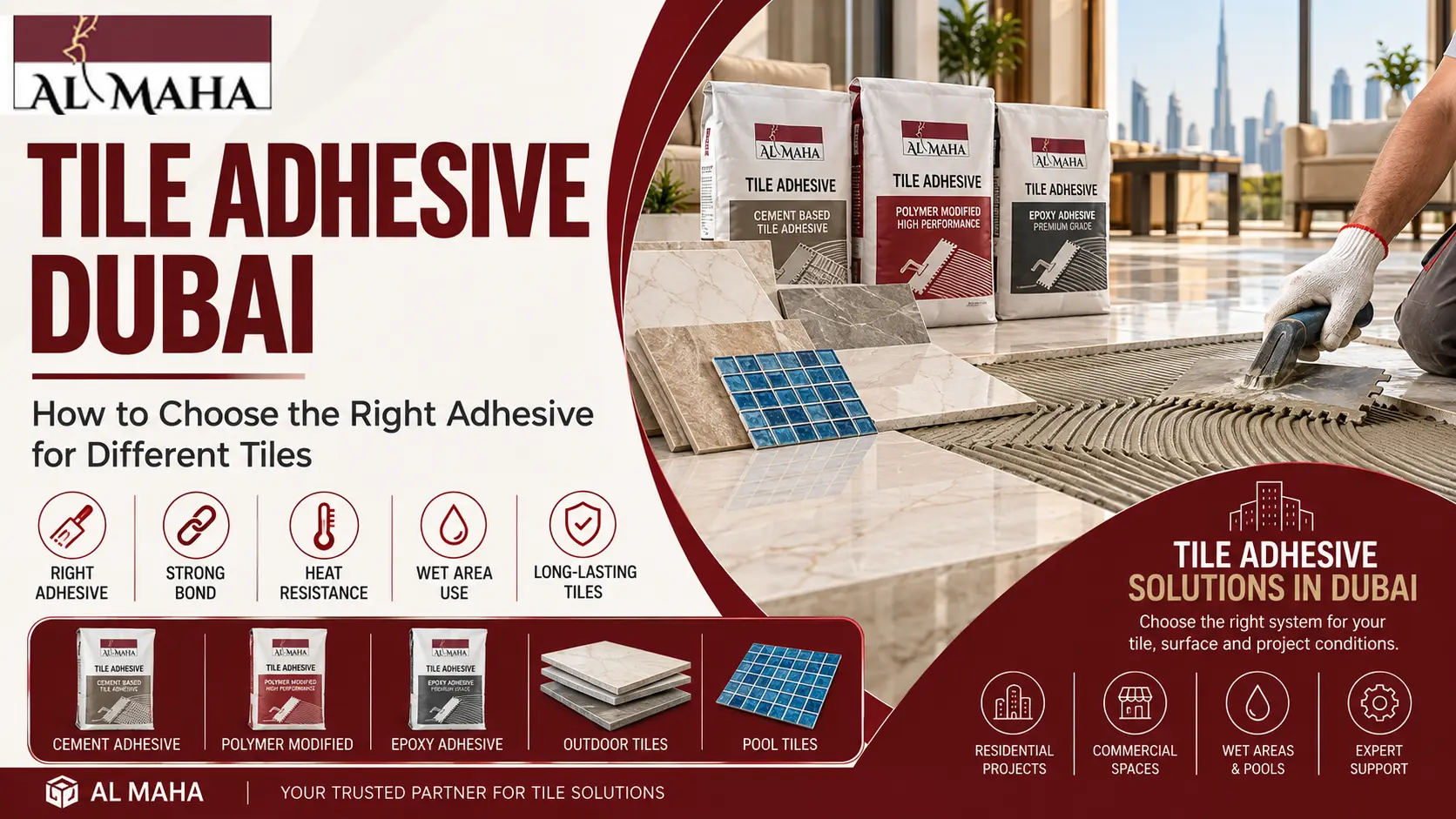
Tile Adhesive Dubai: How to Choose the Right Adhesive for Different Tiles
A tile can look perfect on day one and still fail six months later. The cause is rarely the tile. It is usually the adhesive underneath.
Dubai makes this problem worse. Heat, humidity, direct sun, and heavy cleaning cycles all stress the bond between tile and substrate. The wrong tile adhesive can lead to hollow spots, lifted corners, and cracked surfaces.
This guide explains how to choose the right product for each tile type and location. You will also learn how to read the labels and avoid the mistakes we see on site most often.
What Tile Adhesive Actually Does
Tile adhesive is the layer that holds your tile to the floor or wall. It also spreads load, absorbs small movements, and blocks moisture from reaching the substrate.
Most tile glue adhesive in the UAE falls into three families:
Cement-based adhesive. A powder mixed with water. It is the standard choice for most floors and walls.
Polymer-modified cement adhesive. Cement with added polymers for flexibility and stronger grip. This is what most professionals mean by a good adhesive.
Epoxy and reactive adhesive. A two-part resin system. It has very high strength and chemical resistance, and it costs more.
You may also see ready-mixed pastes. These suit small interior wall jobs. They are not a good fit for floors, wet areas, or outdoor use.
Most quality products follow the European standard EN 12004. The code on the bag tells you what the adhesive can handle.
C1: Standard cement-based adhesive. Fine for light interior jobs on stable surfaces.
C2: Improved adhesive with stronger bond. This is the usual pick for porcelain, large tiles, and any outdoor or wet area.
S1: Deformable. It tolerates a small amount of movement.
S2: Highly deformable. Use it where movement is greater, such as terraces and heated substrates.
T: Reduced slip. Tiles stay in place on walls instead of sliding down.
E: Extended open time. You get more working time before the surface skins over.
F: Fast setting. Useful when you need quick grouting or foot traffic.
A bag marked C2TE S1 tells you a lot. It is a strong, flexible adhesive with no slip and extra working time. That is a smart combination for Dubai conditions.
Why Dubai Conditions Change the Rules
You cannot copy advice written for a cool, damp climate. Local conditions change how adhesive behaves.
Heat shortens open time. On a hot site, adhesive can skin over in minutes. If you place a tile on a dry skin, the bond is weak even if the tile looks fixed.
Hot substrates pull water out. A sun-baked slab absorbs water from the mix too fast. The adhesive cures weakly instead of hardening properly.
Temperature swings cause movement. Outdoor tiles expand during the day and contract at night. Rigid adhesive cannot follow that movement for long.
Humidity and moisture matter. Bathrooms, kitchens, and pools see constant moisture. The adhesive must resist water without softening.
So when you shop for the best tile adhesive in Dubai, look for polymer-modified, C2-grade products. Add extended open time for outdoor and summer work.
Choosing Adhesive by Tile Type
Different tiles absorb water differently, weigh differently, and show different things through the surface. Here is how to match them.
Porcelain Tile Adhesive
Porcelain is dense and absorbs almost no water. That makes bonding harder, because the adhesive cannot grip into pores the way it does with ceramic.
For porcelain tile adhesive, choose:
A C2 polymer-modified adhesive at minimum
S1 flexibility for floors with any movement risk
Extended open time (E) in summer
Large porcelain slabs need extra care. Use the double-bonding method, also called back-buttering. Spread adhesive on the substrate with a notched trowel. Then spread a thin layer on the back of the tile too. This closes gaps and prevents hollow spots.
For a deeper walkthrough, read our porcelain tile adhesive guide for Dubai. If you are working with big formats, see our guide to large format porcelain tiles in Dubai. You can also browse our full porcelain tile range.
Ceramic and Interior Wall Tiles
Ceramic is more porous and lighter than porcelain. It bonds more easily.
Walls: A C1 or C2 adhesive with the T rating keeps tiles from sliding.
Floors: Go with C2 for better bond and durability.
Wet rooms: Use C2 with a waterproofing membrane underneath.
For indoor jobs, our range of interior tiles glue covers most standard needs.
Marble and Natural Stone
Natural stone needs a gentler approach. Some adhesives stain light marble or cause curling.
Use a white adhesive so grey cement does not show through light stone.
Avoid rapid-setting products on large marble slabs unless the supplier approves them.
Seal the stone before grouting to stop grout pigment from soaking in.
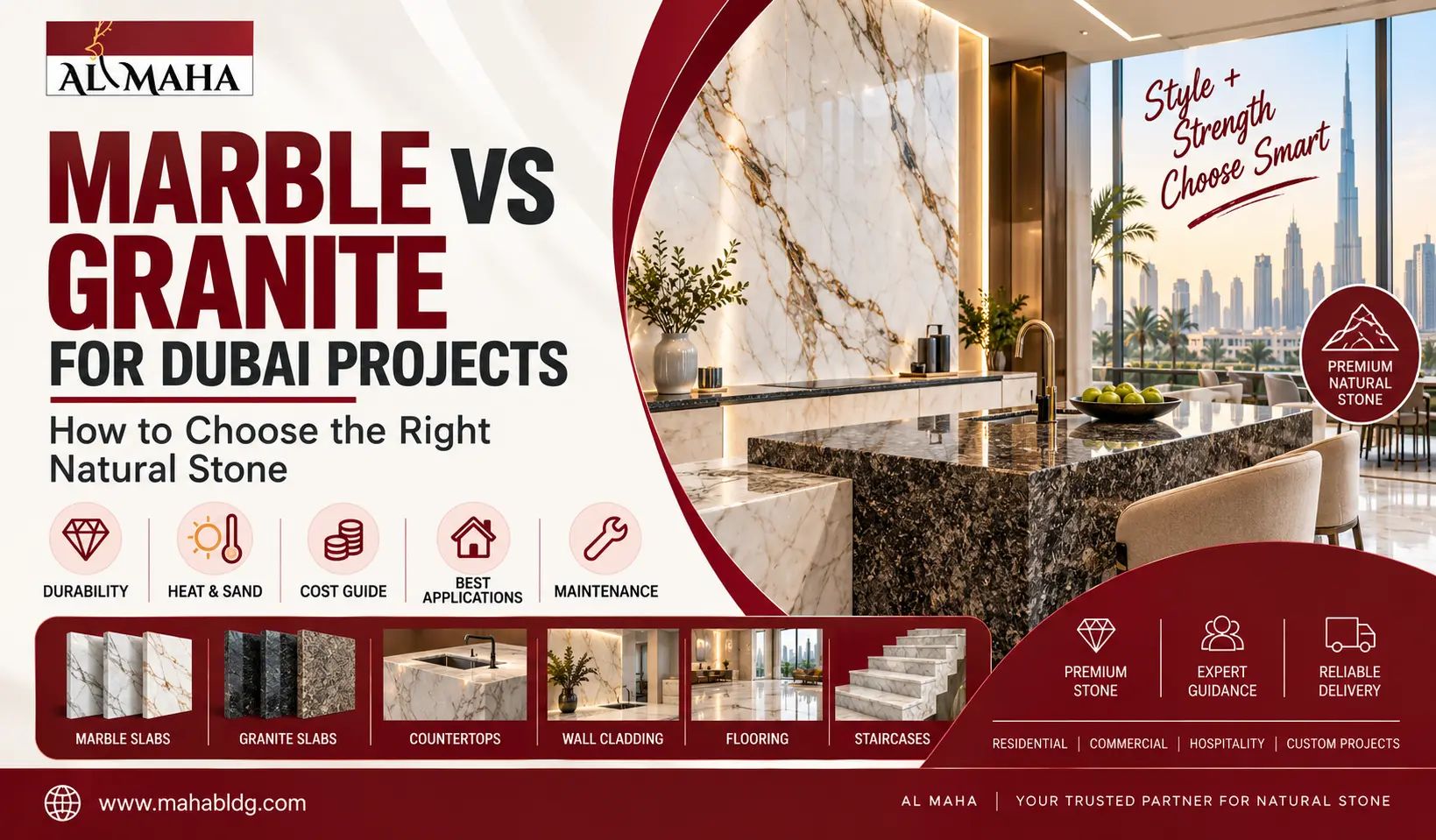
Not sure whether marble or granite suits your project? Our comparison of marble vs granite in Dubai can help. You can also view the marble and granite collection.
Glass Tile Adhesive
Glass is the least forgiving tile. Glass is transparent or translucent, so the adhesive shows through. Any trowel mark or uneven coverage becomes visible.
For glass tile adhesive, follow these rules:
Choose a white, polymer-modified thin-set made for glass.
Spread a smooth, even bed. Comb the adhesive in one direction.
Press each tile fully. Check coverage on a test tile before you go further.
Use a flat, clean substrate. Glass tile exposes every bump.
Some glass mosaics need a specific adhesive, so always check the manufacturer’s instructions first.
Self-Adhesive Wall Tiles and Adhesive Floor Tiles
These two terms cause confusion, so here is the difference.
Self-adhesive wall tiles are thin peel-and-stick sheets, usually PVC or vinyl. They suit rental flats, feature walls, and quick refreshes. They are not true ceramic or porcelain tiles.
Keep these limits in mind:
They work best on clean, smooth, dry walls
Heat and steam can loosen the backing, so avoid direct shower walls
They are a decorative fix, not a permanent build
Adhesive floor tiles can mean two things. Some people mean peel-and-stick vinyl planks. Others mean standard ceramic or porcelain floor tiles that are bonded with adhesive. For long-term floors in busy homes and commercial spaces, bonded porcelain or ceramic tiles with a proper C2 adhesive last far longer than peel-and-stick options.
Pool Tile Adhesive and Swimming Pool Tile Adhesive
Pools are the hardest test for any adhesive. The bond must survive constant water, chlorine or salt, temperature changes, and water pressure.
For pool tile adhesive, look for:
C2S1 or C2S2 polymer-modified cement adhesive, or epoxy adhesive for harsh conditions
Resistance to water immersion and pool chemicals
A proper waterproofing layer beneath the tile bed
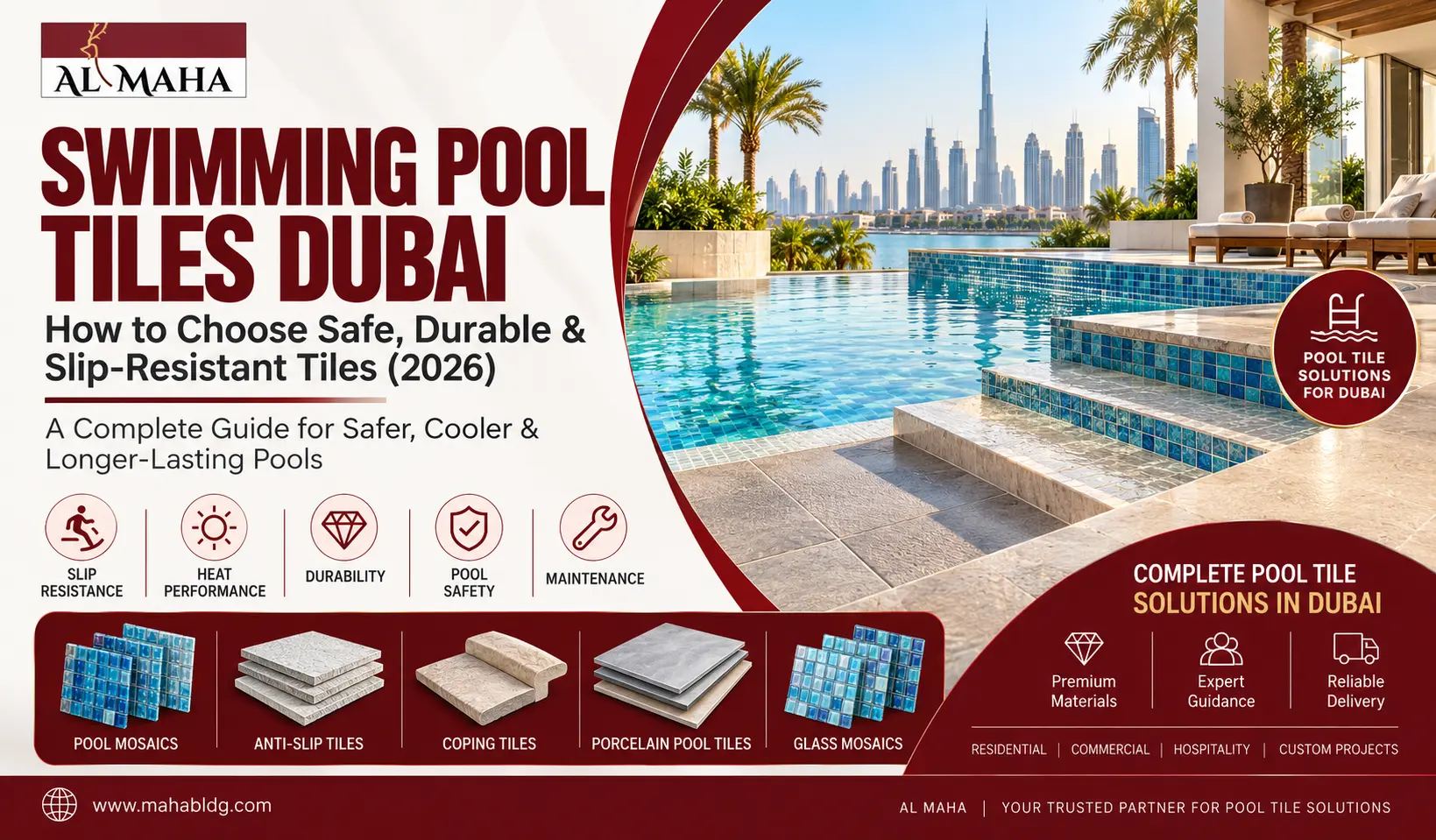
Pair the adhesive with tiles made for pools. Standard wall tiles are not built for constant submersion. Our swimming pool tiles are chosen for this environment. Our guide to swimming pool tiles in Dubai covers finishes, slip resistance, and care.
One important point: do not fill the pool early. Follow the adhesive manufacturer’s cure time before filling. Rushing this step is a common cause of pool tile failure.
Outdoor and Exterior Tile Adhesive
Terraces, balconies, driveways, and façades all face sun, rain, and large temperature swings. The right outdoor tile adhesive must be flexible, water resistant, and strong.
For outdoor tile adhesive and exterior tile adhesive:
Choose C2 S1 or S2 for flexibility
Use waterproof tile adhesive or add a waterproof membrane under the tile bed
Keep full coverage with no air pockets, because trapped water expands and lifts tiles
Plan movement joints at regular intervals so the surface can expand safely
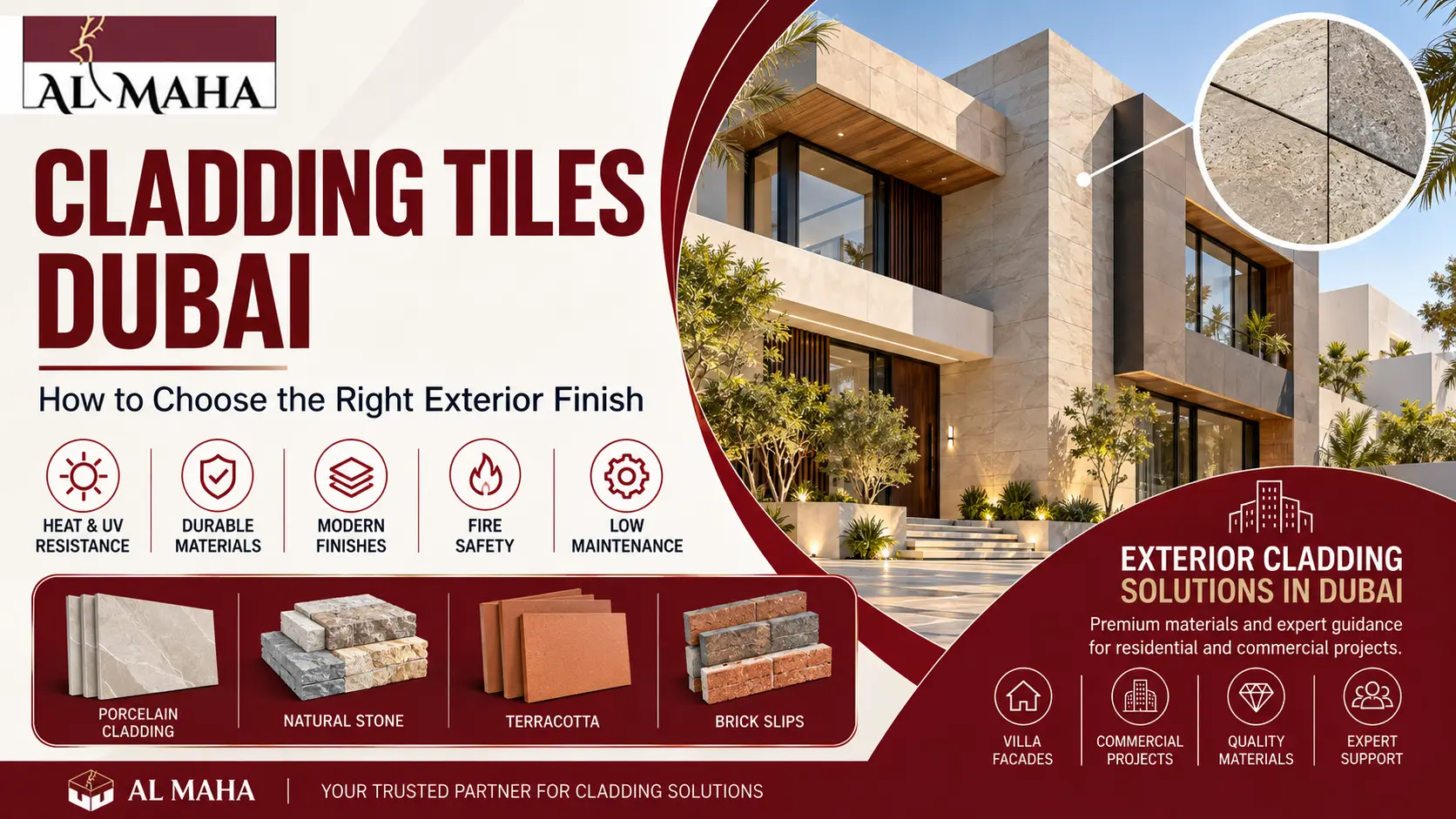
Vertical façades need extra thought. Heavy tiles on exterior walls need strong mechanical support as well as adhesive. Our page on cladding tiles fixing explains the options, and our article on cladding tiles in Dubai: types and benefits shows what works where.
For flooring outdoors, read our guides to outdoor tiles in Dubai and outdoor porcelain tiles in Dubai.
Waterproof Tile Adhesive: What It Does and Doesn’t Do
The phrase “waterproof tile adhesive” is common, and it is easy to misread.
A water-resistant adhesive keeps its bond when wet. It does not make the whole floor waterproof. Water can still pass through grout lines and reach the slab.
For true protection in showers, balconies, and pools, build the system in layers:
Waterproof membrane on the substrate
Water-resistant, polymer-modified adhesive
Quality tile
Suitable grout and flexible sealant at corners
Skipping the membrane is one of the most expensive shortcuts. Leaks show up months later and cost far more to fix than the membrane would have cost.
Grout matters too. Read our porcelain tile grout guide for help choosing the right type.
Quick Reference: Which Adhesive for Which Job?
Application | Recommended Adhesive |
Interior ceramic wall tiles | C1 or C2, with T rating |
Interior porcelain floors | C2, S1 if movement risk |
Large format porcelain | C2 S1, with back-buttering |
Marble and light stone | White C2, non-staining |
Glass tiles | White polymer-modified thin-set |
Outdoor terrace or balcony | C2 S1 or S2, waterproof system |
Exterior façade cladding | C2 S2 plus mechanical fixing |
Swimming pool | C2S1 or epoxy, with waterproofing |
Peel-and-stick decor | Self-adhesive tiles, dry walls only |
Use this as a starting point. Always check the tile maker’s recommendation and the adhesive data sheet.
Preparing the Surface: The Step Most People Skip
Even the best tile adhesive fails on a poor surface. Before you open a bag, check the substrate.
Clean: Remove dust, oil, paint, and loose material.
Flat: Check with a long straightedge. Fix high and low spots first.
Dry and sound: Allow new screeds to cure for the recommended time.
Primed if needed: Very absorbent or smooth surfaces may need a primer.
Dampened in summer: Lightly wet a hot slab so it does not drain water from the adhesive. Remove any standing water before you spread.
We cover this in detail in our guide on how to prepare a floor before installing porcelain tiles. For the full process from start to finish, see our porcelain tile installation guide for Dubai.
Application Tips That Make a Real Difference
Good technique protects your investment. These habits make the biggest difference.
Pick the right trowel. Notch size depends on tile size. Bigger tiles need deeper notches. Using a small trowel on a large tile leaves voids.
Comb in straight lines. Straight ridges let air escape as you press the tile down. Circular patterns trap air.
Work in small sections. In hot weather, spread only as much adhesive as you can cover within the open time.
Do the touch test. Press a finger into the adhesive. If it feels dry or skinned, scrape it off and spread fresh.
Check coverage. Lift a tile now and then. The back should show nearly full contact. Floors and exterior areas need close to full coverage.
Tap and press. Seat each tile firmly. Use a rubber mallet and a levelling system for large formats.
Leave joints open. Keep movement joints free of adhesive and grout. Fill them later with a flexible sealant.
Respect cure times. Do not walk on the floor or grout too early. Follow the data sheet.
Common Mistakes That Lead to Failed Tiles
We see the same problems again and again. Most are easy to avoid.
Using one adhesive for everything. A C1 product suited to a dry interior wall will not hold a porcelain terrace.
Mixing by eye. Too much water weakens the bond. Measure it.
Ignoring open time. Placing tiles on skinned adhesive creates a weak joint.
Skipping back-buttering on large tiles. This leaves hollow areas that crack under load.
Covering movement joints. Rigid surfaces crack when they have no room to move.
Buying the cheapest bag. Saving a little on adhesive can mean redoing the whole floor. For more on avoiding this, read how to prevent cracked porcelain tiles.
Storing bags in the sun. Heat and moisture damage powder. Keep bags dry and cool.
How Much Adhesive Do You Need?
Coverage depends on the trowel notch, tile size, and substrate. A flat interior wall uses far less than a rough exterior slab.
Check the coverage rate on the bag, then add around 10% for waste and uneven surfaces. Buying a little extra is cheaper than stopping mid-job and risking a batch mismatch.
If you are planning a full project, our tile buying guide for Dubai helps you estimate quantities for tiles and materials together.
How to Find the Best Tile Adhesive in Dubai
“Best” depends on your tile, your location, and your conditions. Use this checklist when you compare products:
Match the class to the job (C1, C2, S1, S2, T, E)
Check the tile maker’s advice for porcelain, glass, or stone
Look for the data sheet with open time, cure time, and coverage
Choose polymer-modified for floors, wet areas, and outdoors
Buy from a supplier who gives advice, not just prices
Buy tile and adhesive together so they are matched
A good supplier asks about your project before they sell you a bag. They want to know the tile type, size, location, and substrate. If a seller skips those questions, be careful. Our guide on how to choose the best tile supplier in Dubai explains what to look for.
Final Thoughts
Tile adhesive is a small part of the budget and a big part of the result. The right choice protects your tiles, your floors, and your time.
Remember the essentials:
Match the adhesive grade to the tile and location
Use polymer-modified C2 products for porcelain, outdoor, and wet areas
Pick white adhesive for glass and light stone
Build a waterproof system, not just a waterproof bag
Prepare the surface and respect open time in Dubai’s heat
If you are planning a project, you can explore the full range on the Maha Building Materials categories page or learn more about us. For help matching an adhesive to your tiles, contact our team with your tile type, size, and location. We will point you to the right product.
 12 Oct, 2026