- By Admin
- Floor
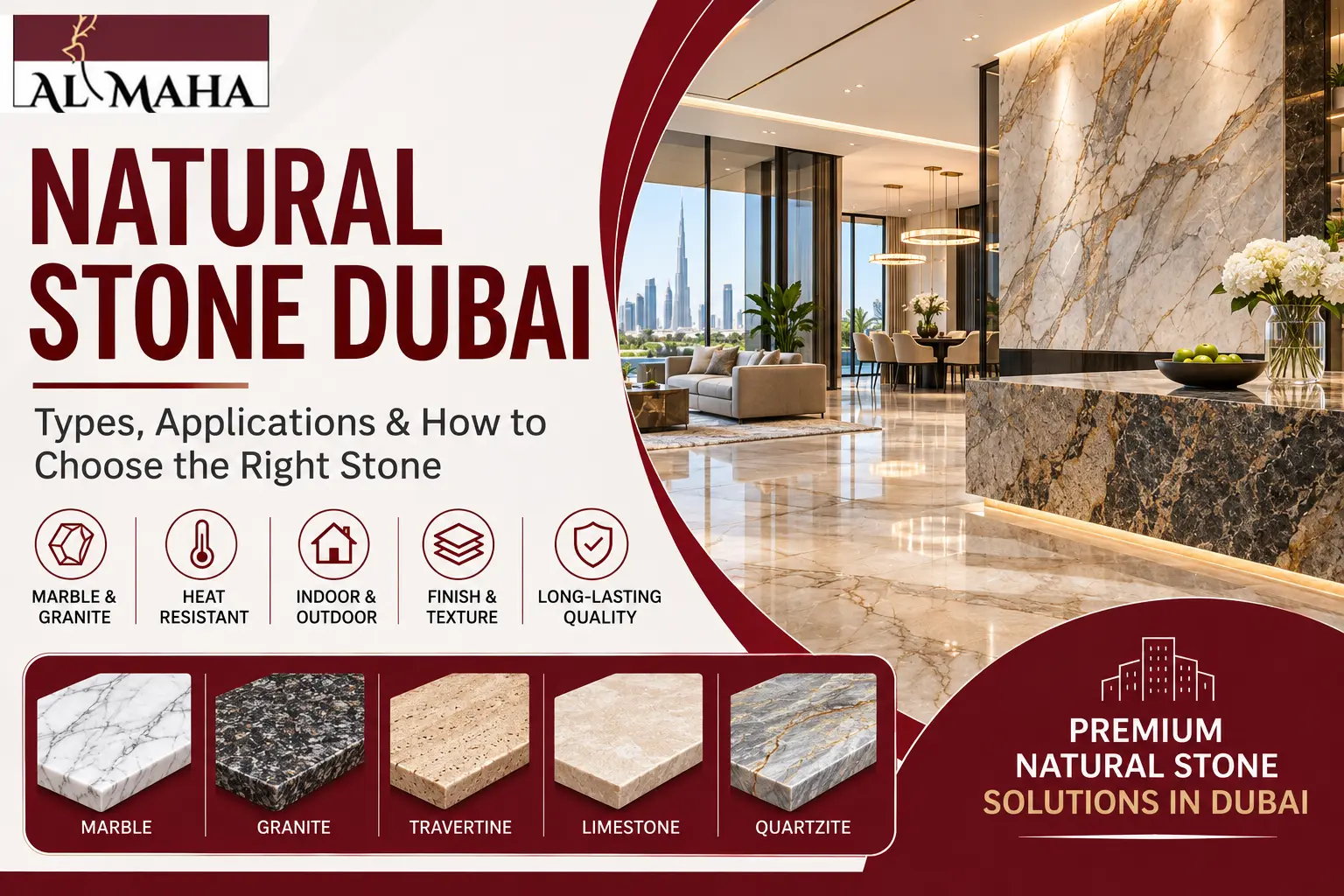
Natural Stone Dubai: Types, Applications & How to Choose the Right Stone
Natural stone is everywhere in Dubai. You see it in villa lobbies, hotel façades, pool decks and kitchen islands. It looks premium, and it lasts for decades when chosen well.
But Dubai is not Milan or Mumbai. Surface temperatures climb past 50°C outdoors. Coastal air carries salt. Air-conditioned interiors sit a few steps from humid terraces. A stone that performs well in one climate can stain, fade or crack in another.
This guide shows you which stones work in the UAE, where to use them, and how to choose with confidence.
Why Natural Stone Still Wins in UAE Projects
Every slab is unique. No two veining patterns match. That is the appeal, and it is why designers keep specifying stone for high-end homes and commercial spaces.
The practical benefits are just as strong:
Long service life. Properly installed stone can outlast the building's fit-out cycle.
Property appeal. Buyers and tenants read stone as a quality signal.
Natural character. Colour and pattern come from the earth, not a print process.
Repairability. Many stone surfaces can be re-honed or re-polished instead of replaced.
The trade-off is that stone needs informed choices. Pick the wrong type for the wrong space and you will see it within a season.
The Main Types of Natural Stone Used in Dubai
Here are the stones you will meet most often at local suppliers. For a quick look at what is available, browse the marble and granite collection.
Granite
Granite is an igneous stone. It is dense, hard and highly resistant to scratches and heat.
Best for: kitchen countertops, high-traffic floors, building entrances, outdoor steps.
Popular choices: Black Galaxy, Absolute Black, and a range of grey and beige varieties.
Watch out for: some dark polished granites show water marks and fingerprints more than you expect.
If your project sees heavy use, granite is the safest starting point.
Marble
Marble is a metamorphic stone prized for soft veining and a luminous finish. Think Makrana, Statuario and Calacatta.
Best for: interior floors, feature walls, bathroom vanities, hotel lobbies.
Watch out for: marble is calcium-based. Acids such as lemon juice, vinegar and many cleaners will etch the surface.
Marble belongs indoors, away from harsh sun and aggressive cleaning routines. If you are torn between the two, our marble vs granite comparison for Dubai breaks down durability, cost and care side by side.
Travertine
Travertine has a warm, earthy look and a naturally porous texture. It is often sold filled and honed for a smoother surface.
Best for: modern minimalist façades, shaded patios, bathroom walls, pool surrounds (when the right finish is used).
Watch out for: unfilled pores collect dirt. Ask whether the slab is filled and how.
Limestone
Limestone offers a calm, uniform colour palette: creams, greys, soft beiges. It suits contemporary design.
Best for: interior floors and walls, shaded exterior cladding.
Watch out for: limestone is softer than granite and reacts to acids. Near the coast, salt can attack the surface over time.
Quartzite
Quartzite starts as sandstone and hardens under heat and pressure. It is tougher than marble and often mimics marble's look.
Best for: kitchen worktops, outdoor kitchens, heat-exposed surfaces.
Watch out for: not every slab sold as quartzite is true quartzite. Ask for the technical data sheet.
Sandstone
Sandstone has a textured, natural grip and earthy tones.
Best for: garden paths, pool decks, boundary walls, exterior cladding.
Watch out for: softer varieties can erode under sand abrasion. Choose dense grades for exposed locations.
Quick Comparison
Stone | Hardness | Heat Tolerance | Best Location | Stain Risk |
Granite | Very high | Excellent | Indoor and outdoor | Low |
Marble | Medium | Good indoors | Interior | High |
Travertine | Medium | Good | Shaded areas, cladding | Medium |
Limestone | Medium-low | Good | Interior, shaded exterior | Medium-high |
Quartzite | High | Excellent | Kitchens, outdoors | Low-medium |
Sandstone | Medium | Excellent | Exterior | Medium |
How Dubai's Climate Changes the Rules
Most stone guides are written for temperate markets. Dubai needs its own checklist.
Heat and thermal expansion
Stone expands in the sun and contracts at night. On a 50°C day, a south-facing deck can get too hot to walk on barefoot.
Light-coloured stones stay cooler than dark ones.
Dark granite in full sun can become uncomfortable and stress the adhesive bed.
Expansion joints are not optional on large outdoor areas.
UV and resin treatment
Many slabs are factory-treated with resin to fill pores and improve shine. Some resins yellow or fade under strong UV.
For exterior use, ask whether the slab is resin-treated.
Choose untreated or UV-stable slabs for sun-exposed surfaces.
Sand and wind
Windblown sand acts like fine sandpaper. Polished stone on exposed façades can dull over time. Textured finishes hide wear better.
Humidity and salt
Coastal areas such as Dubai Marina and Palm Jumeirah face salt-laden air. Salt can migrate through porous stone and leave white deposits on the surface. This is called efflorescence.
Use dense, low-absorption stone near the sea.
Seal correctly and re-seal on schedule.
Allow the substrate to dry fully before installation.
The AC-to-terrace problem
A stone floor that runs from a cold, dry living room to a hot, humid terrace goes through constant temperature swings. Consider changing stone type or using a threshold detail where the two zones meet.
Where to Use Natural Stone: Applications by Space
Interior applications
Flooring. Marble and limestone create a refined look in living areas. Granite suits entryways and corridors that take daily traffic.
Feature walls. Bookmatched slabs, where two cuts mirror each other, turn a wall into a focal point. Marble and quartzite are the usual picks.
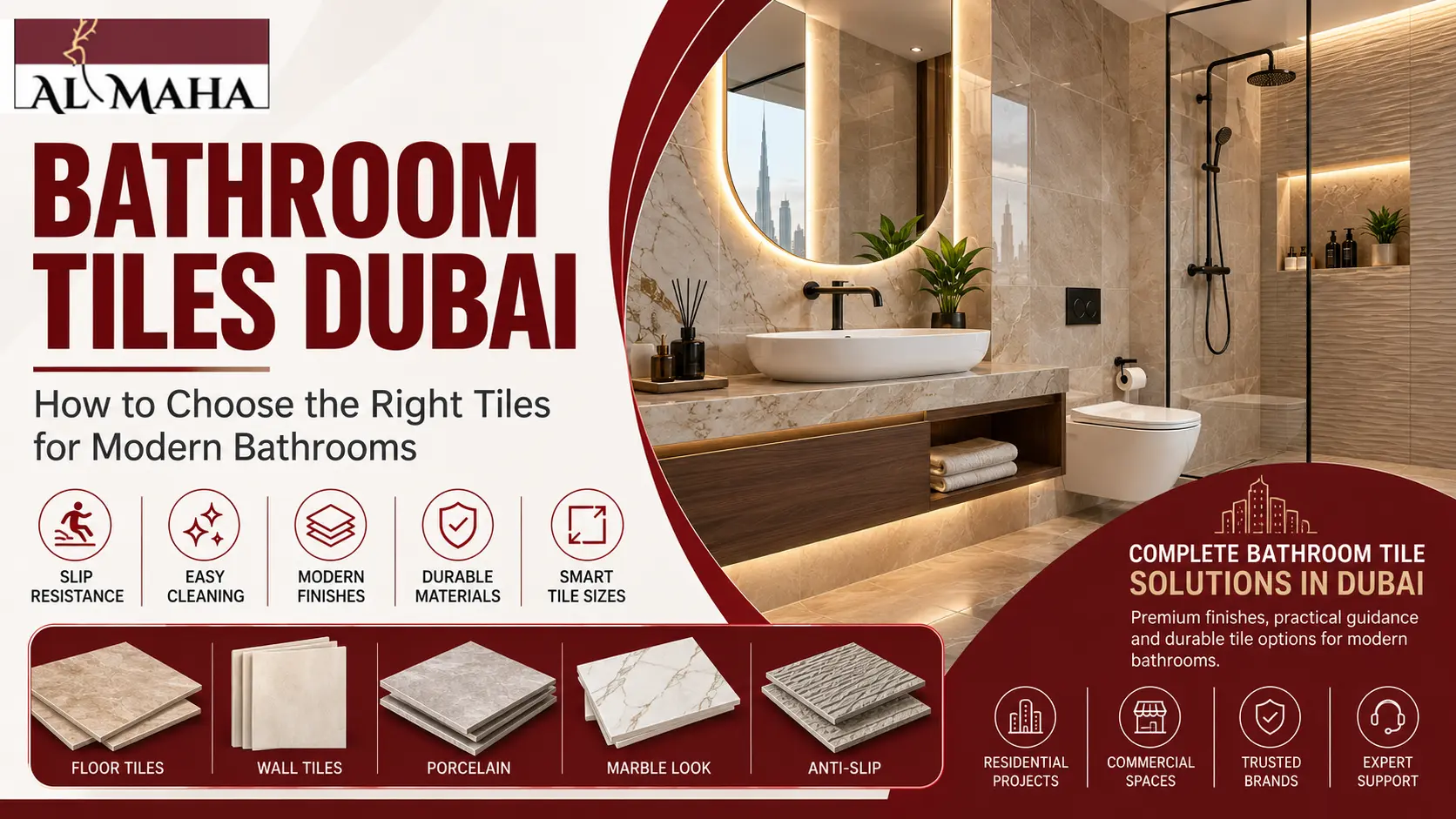
Bathrooms. Marble vanities and stone walls bring a spa feel. Pair them with the right sealer and gentle cleaners. For design inspiration, see these luxury bathroom tile ideas for Dubai.
Kitchens. Granite and quartzite handle heat, knives and daily abuse. If you also need wall and floor surfaces, read our guide to kitchen tiles in Dubai.
Exterior applications
Pool decks. Slip resistance and heat comfort come first. Choose light-coloured sandstone, textured travertine or flamed granite. Our swimming pool tiles range and the pool tile guide cover the safety details.
Pavers and terraces. Non-slip finishes matter, especially after washdowns or rain. See our overview of outdoor tiles in Dubai if you are comparing stone with porcelain.
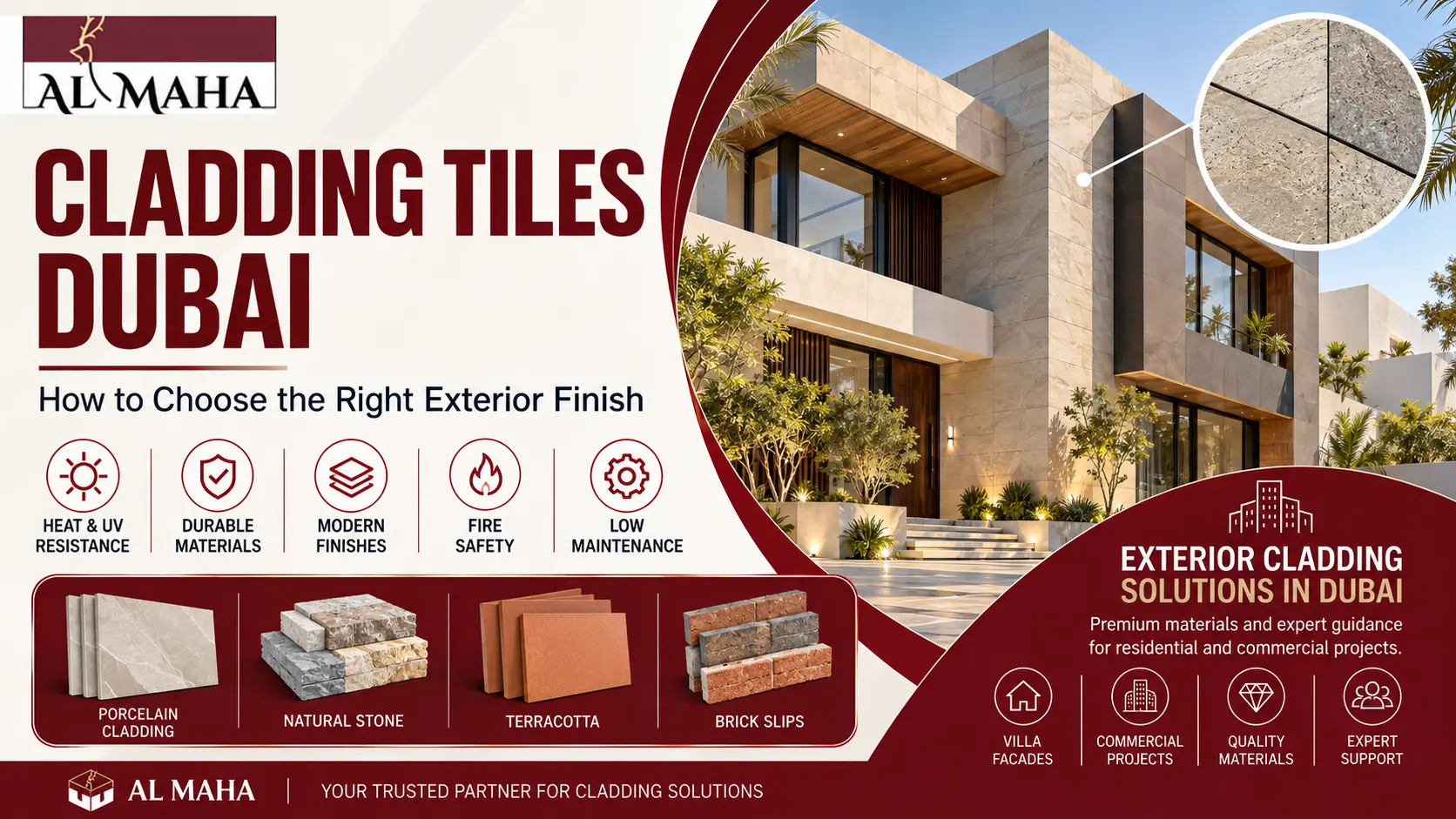
Façades and cladding. Ventilated stone façades reduce heat gain and protect the structure. Fixing method matters as much as the stone. Read about cladding tiles and their benefits and explore cladding tiles fixing options.
Surface Finishes: Pick the Texture, Not Just the Colour
The finish changes how stone looks, feels and performs.
Polished: mirror shine. Best for dry interiors. Can be slippery when wet.
Honed: matte and smooth. Hides scratches better than polished and suits bathrooms and kitchens.
Flamed: heat-roughened surface with strong grip. Good for outdoor steps and pool decks.
Bush-hammered: deeply textured. Excellent slip resistance for exterior paving.
Brushed: softly textured with an aged look. Works well for travertine and limestone.
For a deeper look at how finishes behave, our tile finish guide explains the options in plain language.
How to Choose the Right Stone: A Four-Step Process
Step 1: Assess traffic and exposure
Start with where the stone will live.
Interior with AC, or outdoor in direct sun?
Light residential use, or a commercial lobby with constant footfall?
Near the coast or inland?
These answers narrow your list quickly. Marble indoors, granite or quartzite for hard-use zones, sandstone or flamed granite outside.
Step 2: Choose the finish
Match the finish to the safety and comfort needs of the space. Wet areas need grip. Dry lounges can take polish.
Step 3: Plan sealing and protection
Sealing is not a one-time job. Ask your supplier:
Which sealer suits this stone?
How often should it be re-applied?
Is the sealer rated for UV and outdoor use?
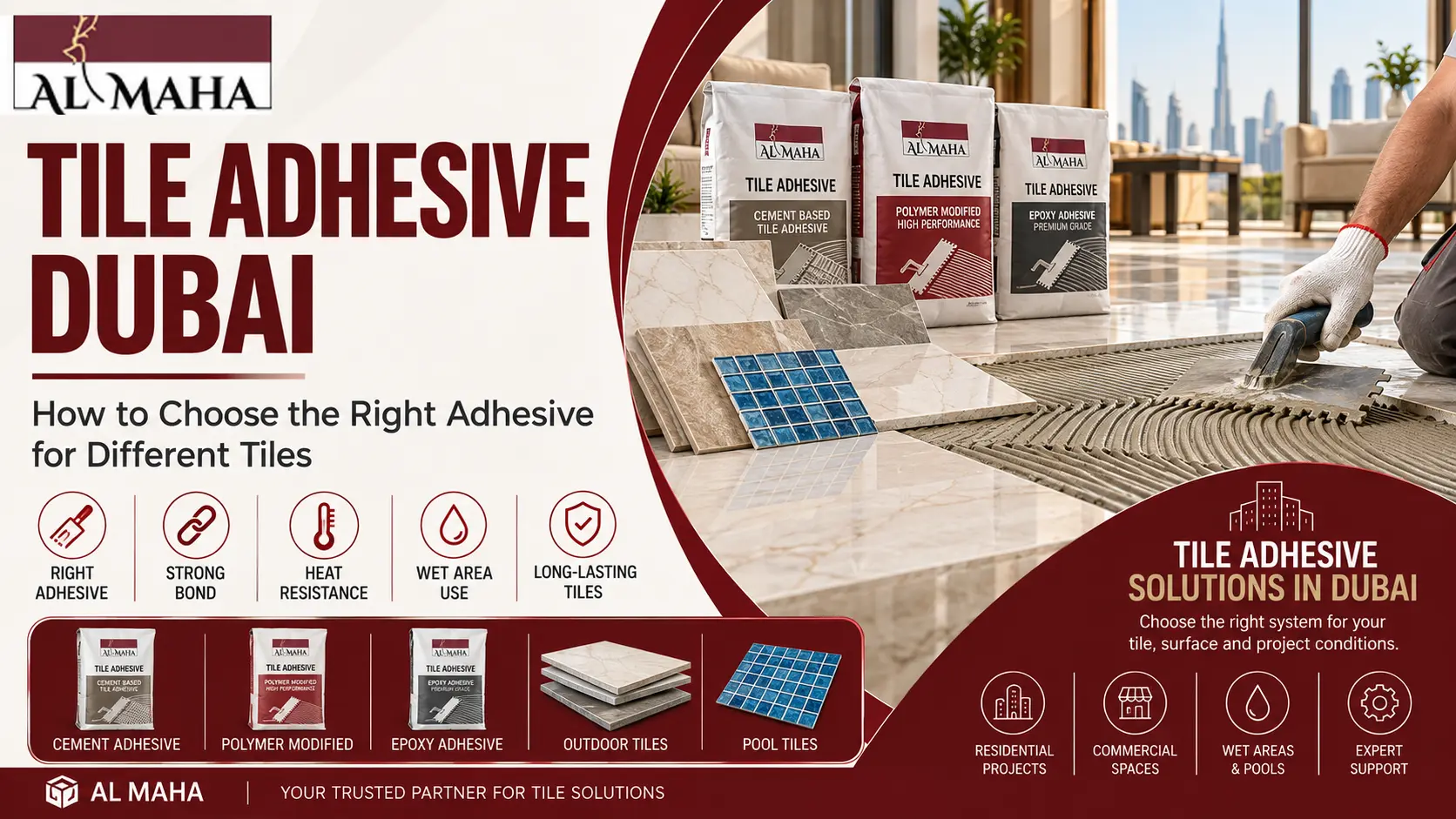
Also confirm the correct bonding material. The wrong adhesive can stain light stone or fail under heat. Our guide to choosing tile adhesive in Dubai explains what to look for.
Step 4: Budget for the full project
The slab price is only part of the cost. Include:
Cutting, edging and fabrication
Transport and handling (stone is heavy)
Adhesive, sealer and grout
Skilled installation labour
A wastage allowance, usually 10 to 15 percent, higher for bookmatched or heavily veined slabs
Prices in the UAE vary widely by origin, grade and thickness. As a rough guide, granite tends to sit at the lower to mid end, premium marbles and rare quartzites at the top. Always ask for a written quote per square metre that separates material from installation.
Natural Stone vs. Porcelain: Is Stone Always the Answer?
Not always. Porcelain now copies stone patterns convincingly and needs less maintenance. It is also more uniform from batch to batch.
Choose natural stone when you want authenticity and unique patterns. Choose porcelain when you want predictable results and easier upkeep. Many projects use both: stone for statement areas, porcelain for the rest. If you are weighing it up, start with our guide to porcelain tiles in Dubai and the floor tiles buying guide.
Where to Source Natural Stone in Dubai and the UAE
Stone is sold through slab yards, showrooms and trading companies across Dubai, Sharjah and other emirates. Industrial areas such as Al Qusais, Ras Al Khor and Dubai Investments Park are known for building-material suppliers.
Imported stone, especially from Italy, India, Turkey and Brazil, adds shipping time. Confirm stock availability before you commit to a schedule.
Questions to ask any supplier
Before you pay a deposit, ask:
Can I see the exact slabs, not just a sample?
Is the stone resin-treated or fully natural?
What is the water absorption rate?
Is the finish slip-rated for my application?
Where does the stone come from, and what is the lead time?
Do you supply sealers and adhesive?
What is your policy on breakage and batch variation?
A good supplier answers quickly and clearly. If you need a checklist for vetting vendors, see how to choose the best tile supplier in Dubai. For wider project needs, our building materials in Dubai overview is a useful companion.
Common Mistakes to Avoid
Using polished marble outdoors. It dulls, stains and gets slippery.
Ignoring slab variation. Inspect slabs together and approve the layout before cutting.
Skipping expansion joints. Heat will find the weak spot.
Sealing too early. Let the surface and substrate dry first.
Choosing on price alone. The cheapest slab can cost more after repairs.
Using harsh cleaners. Acidic products damage marble, limestone and travertine.
Care Tips to Keep Stone Looking New
Wipe spills quickly, especially on marble and limestone.
Use pH-neutral cleaners.
Place mats at entrances to trap sand and grit.
Re-seal on the schedule your supplier recommends.
Rinse outdoor stone regularly to remove salt and dust.
Small habits protect a large investment.
Final Thoughts
The right stone is the one that fits your space, your climate and your budget. Start with exposure and traffic. Match the finish to the safety needs. Plan sealing and installation as part of the budget, not an afterthought.
Dubai rewards careful choices. Pick well and your stone will look good for decades.
Ready to compare options? Explore the marble and granite range or contact the Maha team for help matching stone to your project.
Frequently Asked Questions
What is the best natural stone for outdoor use in Dubai?
Dense granite, quartzite and good-grade sandstone handle heat and sand well. Use flamed or bush-hammered finishes for grip.
Is marble suitable for Dubai homes?
Yes, indoors. Avoid it for sun-exposed or wet outdoor areas, and use gentle cleaners.
Does natural stone need sealing?
Most types do. Sealing reduces staining and moisture absorption, and it should be repeated over time.
How do I stop salt damage near the coast?
Choose low-absorption stone, seal properly and rinse exterior surfaces regularly.
Is granite or marble better for kitchens?
Granite is tougher and more stain-resistant. Marble looks softer but needs more care.
 26 Oct, 2026