- By Admin
- Floor
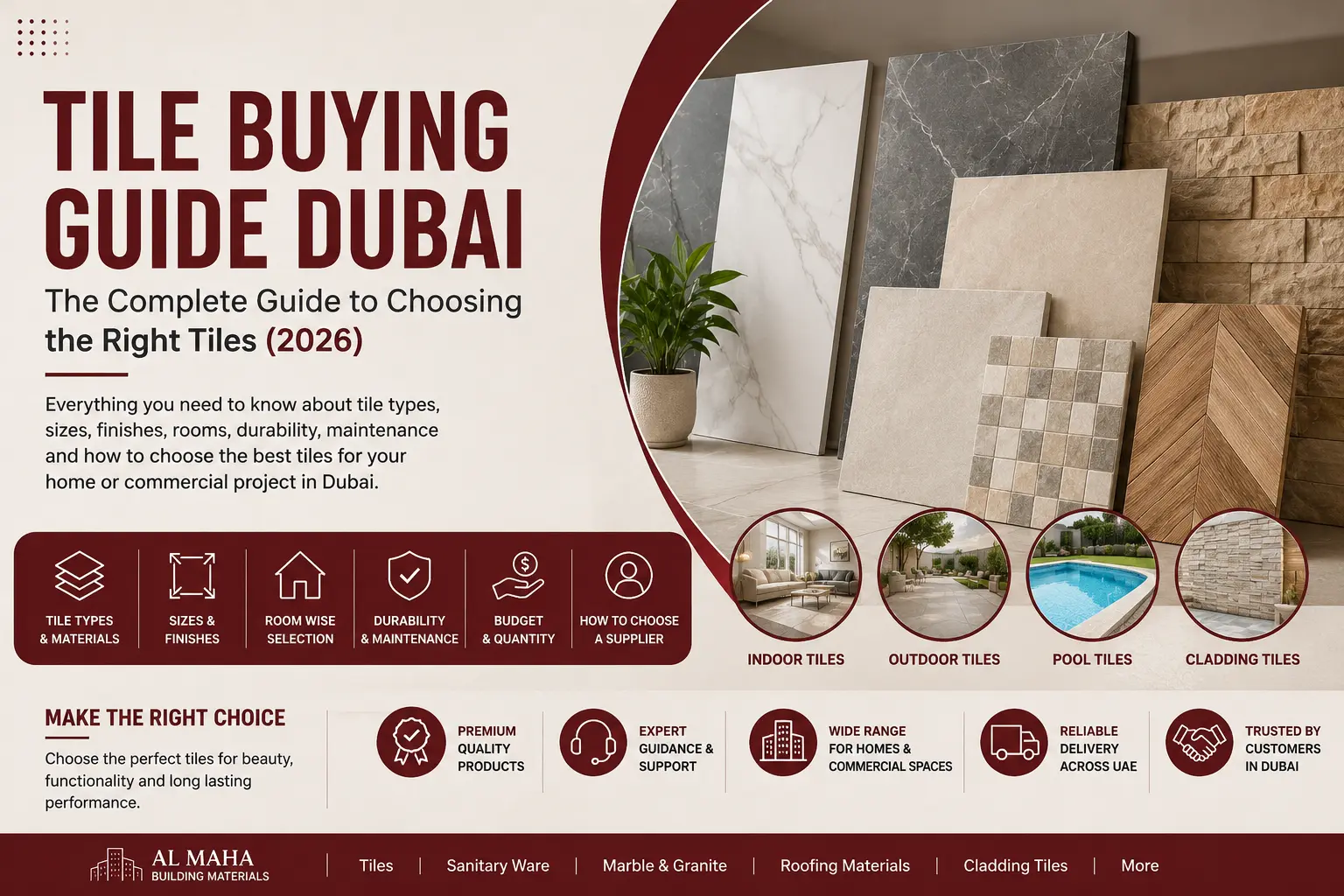
Tile Buying Guide Dubai: The Complete Guide to Choosing the Right Tiles (2026)
Choosing tiles is an important decision for any residential or commercial project. The right tile can influence the appearance, durability, maintenance, safety, and overall cost of a space.
Dubai properties range from apartments and villas to hotels, offices, restaurants, retail stores, and large commercial developments. Each type of project has different flooring and wall requirements.
With so many materials, sizes, finishes, colours, and designs available, choosing the right option can become challenging.
This Tile Buying Guide Dubai explains the key factors to consider before purchasing tiles, including tile material, size, finish, application, durability, maintenance, and supplier selection.
What to Consider Before Buying Tiles in Dubai
Before choosing a tile based only on colour or appearance, consider the following factors:
Where the tile will be installed
Expected foot traffic
Indoor or outdoor application
Moisture exposure
Required slip resistance
Tile size
Surface finish
Maintenance requirements
Design style
Installation requirements
Budget
Quantity required
A tile that works well in a bedroom may not be the best choice for a swimming pool area or commercial entrance. The first step is therefore to understand the requirements of the space.
Different Types of Tiles Available in Dubai
The UAE market offers a wide variety of tile materials and formats. Common options include: Porcelain tiles, Ceramic tiles, Floor tiles, Wall tiles, Outdoor tiles, Swimming pool tiles, Cladding tiles, Marble and natural stone. Each material has different characteristics and applications.
Porcelain Tiles
Porcelain tiles are a popular choice for residential and commercial projects because of their durability, design variety, and relatively low water absorption. They are available in different sizes, colours, finishes, textures, patterns, stone-look designs, marble-look designs, and wood-look designs. Porcelain tiles can be used for floors, walls, bathrooms, kitchens, living rooms, commercial interiors, and suitable outdoor applications. For a detailed guide, read Porcelain Tiles Dubai: Everything You Need to Know.
Ceramic Tiles
Ceramic tiles are another common option for residential and commercial interiors. They are available in many colours, patterns, sizes, and finishes and can be suitable for selected wall and floor applications depending on the product specifications. Ceramic tiles can be particularly useful when design flexibility and cost considerations are important. For a direct comparison between the two materials, read Porcelain Tiles vs Ceramic Tiles.
Floor Tiles
Floor tiles need to withstand regular foot traffic, furniture loads, cleaning, and everyday wear. When choosing floor tiles Dubai homeowners and businesses should consider durability, slip resistance, surface finish, expected traffic, maintenance, room size, and tile thickness and technical specifications. For a detailed floor-tile guide, see How to Choose the Best Floor Tiles in Dubai.
Wall Tiles
Wall tiles are primarily selected based on design, moisture resistance, cleaning requirements, and the characteristics of the installation area. They can be used in bathrooms, kitchens, feature walls, commercial interiors, retail spaces, and hospitality projects. Rectangular formats and large-format tiles can create different visual effects depending on the room design.
Outdoor Tiles
Outdoor flooring faces conditions that indoor flooring does not. Outdoor areas may be exposed to direct sunlight, heat, dust, moisture, sand, and heavy foot traffic. The selected product should therefore be specifically suitable for its intended outdoor application. Popular outdoor applications include patios, balconies, terraces, garden paths, outdoor seating areas, and villa entrances. For more information, read Outdoor Tiles Dubai.
Swimming Pool Tiles
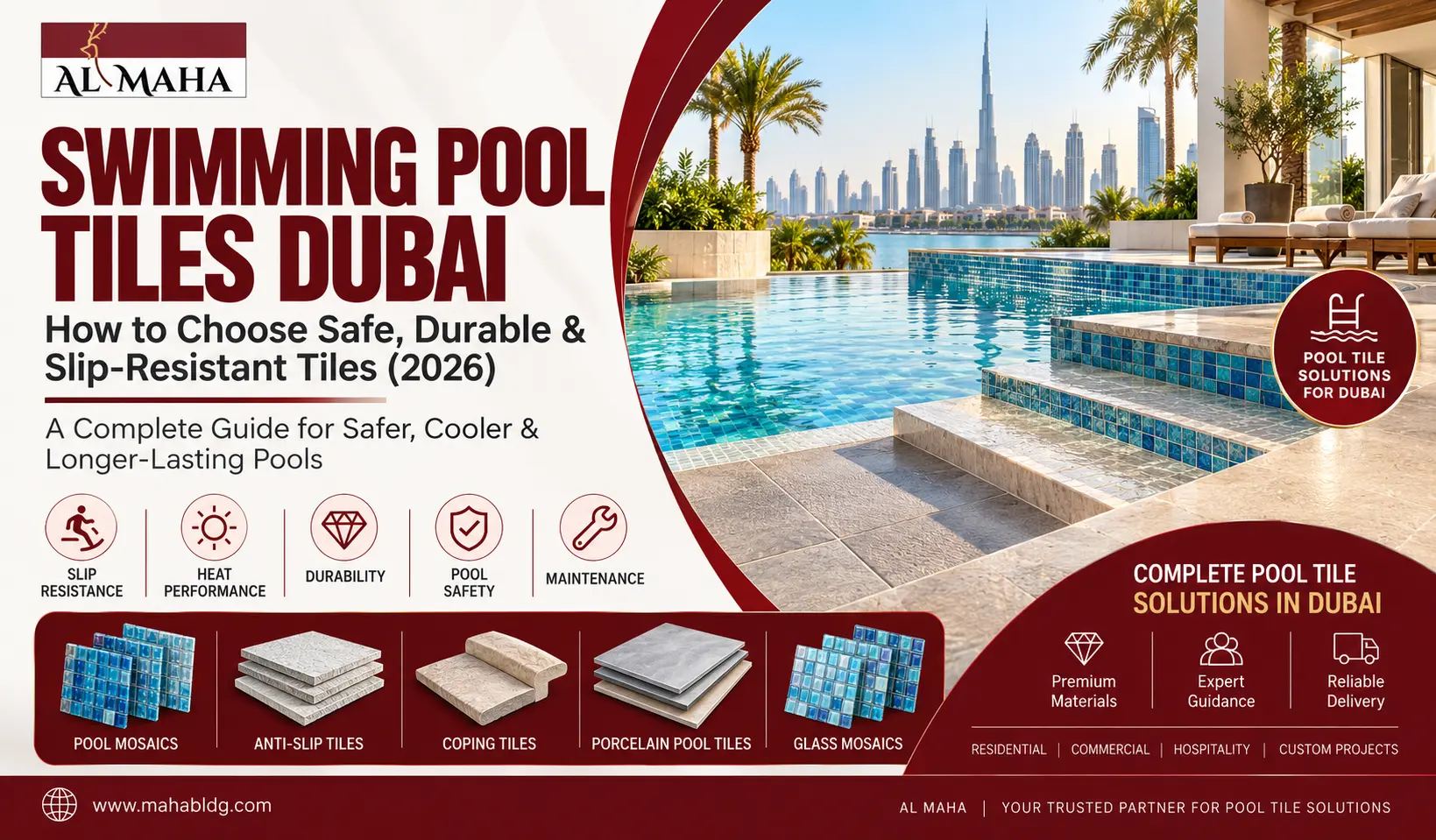
Swimming pool areas require careful consideration of water exposure, surface characteristics, cleaning, and slip resistance. Pool tiles can be used for pool interiors, pool surrounds, water features, and outdoor pool areas. The appropriate product should be selected according to the specific installation area and technical requirements. Explore Al Maha's Swimming Pool Tiles collection for pool-related applications.
Cladding Tiles
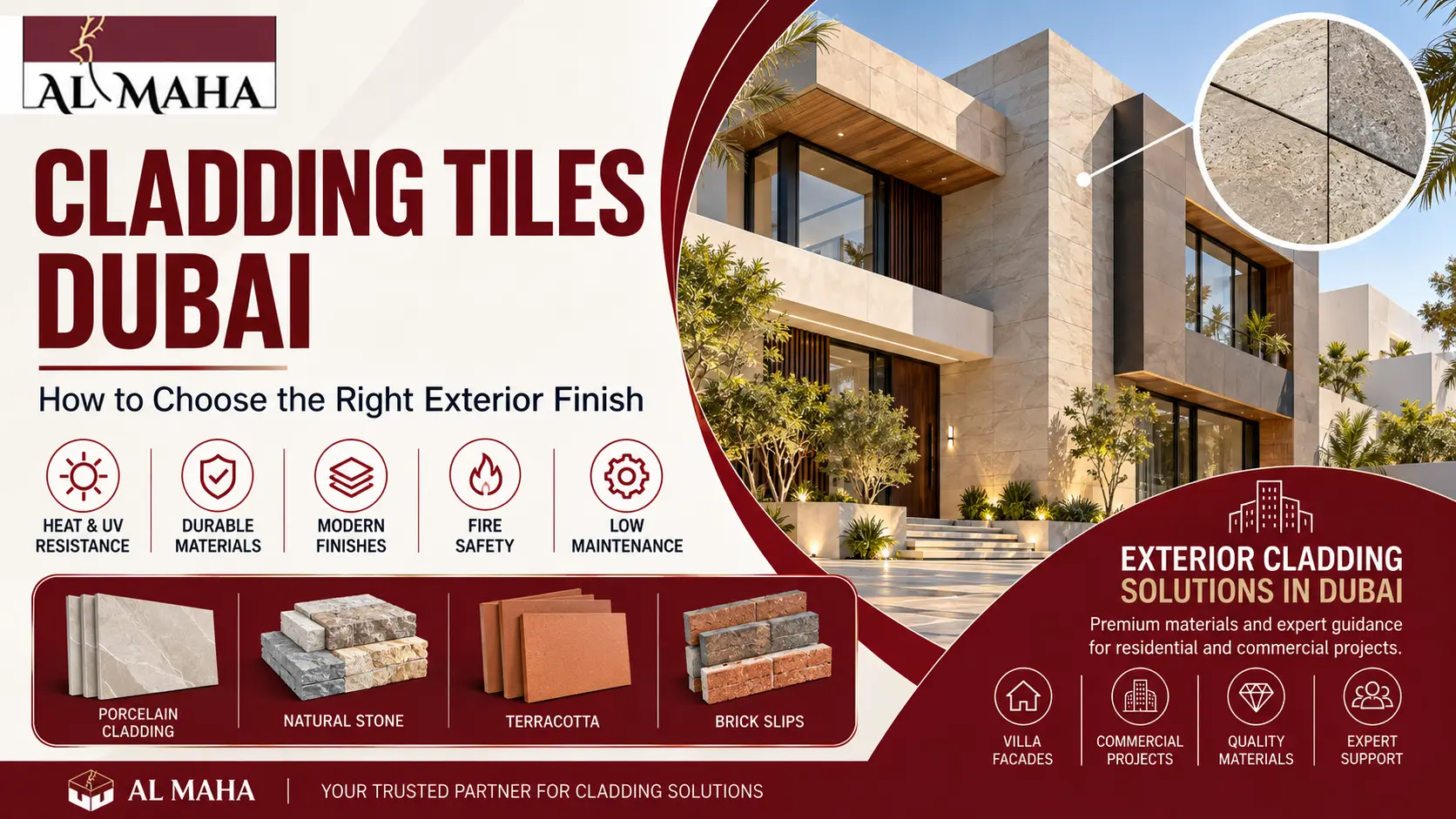
Cladding tiles can be used to add texture, colour, and architectural character to walls and exterior surfaces. They can work well for villa exteriors, feature walls, commercial buildings, entrance areas, and landscape features. For projects requiring installation support, Al Maha also offers Cladding Tiles with Fixing.
Choosing Tiles Based on Room
Different rooms have different functional and design requirements.
Best Tiles for Living Rooms
Living rooms often benefit from durable tiles with a visually appealing finish. Popular options include porcelain tiles, marble-look porcelain, stone-look porcelain, and large-format tiles such as 600 × 600 mm, 600 × 1200 mm, and 800 × 800 mm. Large formats can reduce visible grout lines and create a more continuous appearance. Read our guide: Best Porcelain Tiles for Living Rooms, Kitchens & Bathrooms.
Best Tiles for Kitchens
Kitchen flooring should be practical, durable, and relatively easy to maintain. Consider stain resistance, surface finish, cleaning requirements, slip resistance, room dimensions, and cabinet layout. For kitchen walls, tiles can also be used as backsplashes to protect surfaces and create a decorative feature. Porcelain and ceramic tiles can both be suitable depending on the specific product and application.
Best Tiles for Bathrooms
Bathrooms require particular attention to moisture and surface safety. When selecting bathroom tiles, consider water exposure, slip resistance, surface finish, cleaning requirements, tile size, and grout requirements. Larger wall tiles can reduce the number of grout lines and create a cleaner visual appearance.
Best Tiles for Bedrooms
Bedrooms provide greater flexibility because they generally experience less demanding conditions than kitchens, bathrooms, and outdoor areas. Suitable options can include porcelain tiles, ceramic tiles, wood-look porcelain, stone-look porcelain, and matte finishes. The choice can be based largely on design preference, maintenance requirements, and the overall interior concept.
Best Tiles for Outdoor Areas
Outdoor spaces require tiles designed for the conditions they will experience. Suitable options can include appropriately specified outdoor porcelain tiles, textured tiles, stone-look tiles, and large outdoor formats. For a more detailed outdoor guide, read Outdoor Porcelain Tiles Dubai.
Choosing the Right Tile Size
Tile size can significantly influence the appearance of a room.
Common porcelain tile sizes:
300 × 300 mm — Small areas and selected decorative applications
300 × 600 mm — Walls and bathrooms
600 × 600 mm — Bedrooms, kitchens and living areas
600 × 1200 mm — Modern living spaces and villas
800 × 800 mm — Large residential and commercial areas
1200 × 1200 mm — Large open spaces
Large Format — Premium residential and commercial projects
The right size depends on the room dimensions, layout, design concept, installation requirements, and intended application. For a detailed size guide, read How to Choose the Right Porcelain Tile Size for Every Room.
How Tile Size Affects Room Appearance
Large Tiles
Large tiles generally create fewer grout lines, greater visual continuity, a contemporary appearance, and a spacious feeling. They are often suitable for large living rooms, villas, hotels, and commercial interiors.
Smaller Tiles
Smaller tiles can provide greater installation flexibility, easier handling, more layout options, and better adaptability around complex spaces. They can be useful in bathrooms, small rooms, decorative applications, and areas with multiple corners.
Choosing the Right Tile Finish
Tile finish affects both appearance and functionality.
Matte
Matte tiles provide a softer, less reflective appearance and can work well across many residential and commercial applications.
Glossy
Glossy tiles reflect more light and can create a bright, polished appearance. They are commonly used for selected walls and decorative applications.
Textured
Textured finishes can add depth and visual interest. They can also be useful in applications where additional surface grip is required, depending on the product specification.
For a detailed comparison, read Tile Finish Guide: How to Choose Matte, Glossy, or Textured Tiles.
Choosing the Right Tile Colour and Design
Colour should complement the overall interior or exterior design.
Light Colours — Light beige, cream, white, and soft grey can create a bright and spacious appearance.
Dark Colours — Charcoal, dark grey, and black can create a bold and sophisticated appearance.
Natural Colours — Beige, sand, stone, and earthy tones can work well in villas and outdoor spaces.
Marble-Look Tiles — Marble-look porcelain can create a premium appearance while providing the practical characteristics of porcelain.
Wood-Look Tiles — Wood-look porcelain tiles can bring a warm appearance to bedrooms, living rooms, and other interiors.
Matte vs Glossy vs Textured Tiles
Finish | Appearance | Common Applications |
|---|---|---|
Matte | Soft and understated | Floors, interiors |
Glossy | Bright and reflective | Walls, decorative areas |
Textured | Tactile and detailed | Selected outdoor and feature applications |
The right finish should be selected based on both appearance and technical requirements.
Tile Durability and Maintenance
Tile durability depends on the material, product specifications, installation quality, and application. High-traffic areas may require products designed to withstand more demanding use.
When comparing tiles, consider: expected foot traffic, surface hardness, water exposure, cleaning frequency, staining, outdoor exposure, and installation conditions.
Maintenance requirements should also be considered before purchasing. A tile that looks attractive but requires more maintenance than your project can accommodate may not be the most practical choice.
How Dubai's Climate Affects Tile Selection
Dubai's climate creates specific considerations for outdoor and semi-outdoor applications. Outdoor surfaces can experience high temperatures, strong sunlight, dust, sand, moisture, and frequent cleaning.
For outdoor projects, select products specifically designed and rated for the intended environment. Surface characteristics, slip resistance, installation method, drainage, and product specifications should all be reviewed before installation.
Tiles for Residential Projects
Residential tile selection depends on the room, lifestyle, design preference, and maintenance requirements. For villas and apartments, common applications include living rooms, bedrooms, kitchens, bathrooms, balconies, terraces, and entrances. A coordinated tile palette can help create consistency throughout the property.
Tiles for Commercial Projects
Commercial projects may have higher foot traffic and more demanding maintenance requirements. Applications can include hotels, restaurants, offices, retail stores, showrooms, and commercial buildings.
For commercial projects, consider traffic levels, durability, cleaning, safety, design consistency, replacement availability, and installation requirements. The right tile specification should be selected according to the project's operational requirements.
How to Calculate the Quantity of Tiles Required
Before ordering tiles, measure the area that needs to be covered.
Basic calculation: Length × Width = Area
For example, a room measuring 5 m × 4 m has an area of: 5 × 4 = 20 m²
You should then account for additional tiles required for cutting, breakage, installation waste, and future repairs. The exact allowance depends on the room layout, tile size, installation pattern, and project complexity. It is also important to confirm the tile coverage per box before placing the final order.
Common Tile Buying Mistakes
Choosing Only Based on Appearance — A beautiful tile may not be technically suitable for the intended application.
Ignoring Tile Size — The wrong size can make installation more difficult or create an unbalanced appearance.
Ignoring Surface Finish — Finish affects appearance, maintenance, and suitability for specific applications.
Buying Without Measuring — Incorrect quantity calculations can cause shortages or unnecessary excess.
Ignoring Installation Requirements — Large-format and specialized tiles may require specific installation techniques.
Choosing the Cheapest Option — The lowest initial price does not always represent the best overall value.
Not Considering Future Availability — For large projects, maintaining access to replacement tiles can be useful for future repairs.
How to Choose a Tile Supplier in Dubai
The supplier you choose can influence product availability, quality consistency, project support, and purchasing efficiency.
Before selecting a supplier, consider: Product Range (look for a supplier that offers suitable materials, sizes, finishes, and applications), Product Quality (check product specifications and quality consistency), Project Experience (suppliers serving residential and commercial projects may be better positioned to understand different requirements), Availability (confirm stock levels and expected lead times before ordering), Technical Support (for larger or more complex projects, supplier guidance can be valuable), and Delivery (consider delivery capabilities and scheduling requirements).
For a more detailed supplier-selection guide, read How to Choose the Best Tile Supplier in Dubai.
Why Choose Al Maha Building Materials?
Al Maha Building Materials provides building material and tile solutions for residential and commercial projects in Dubai and the UAE.
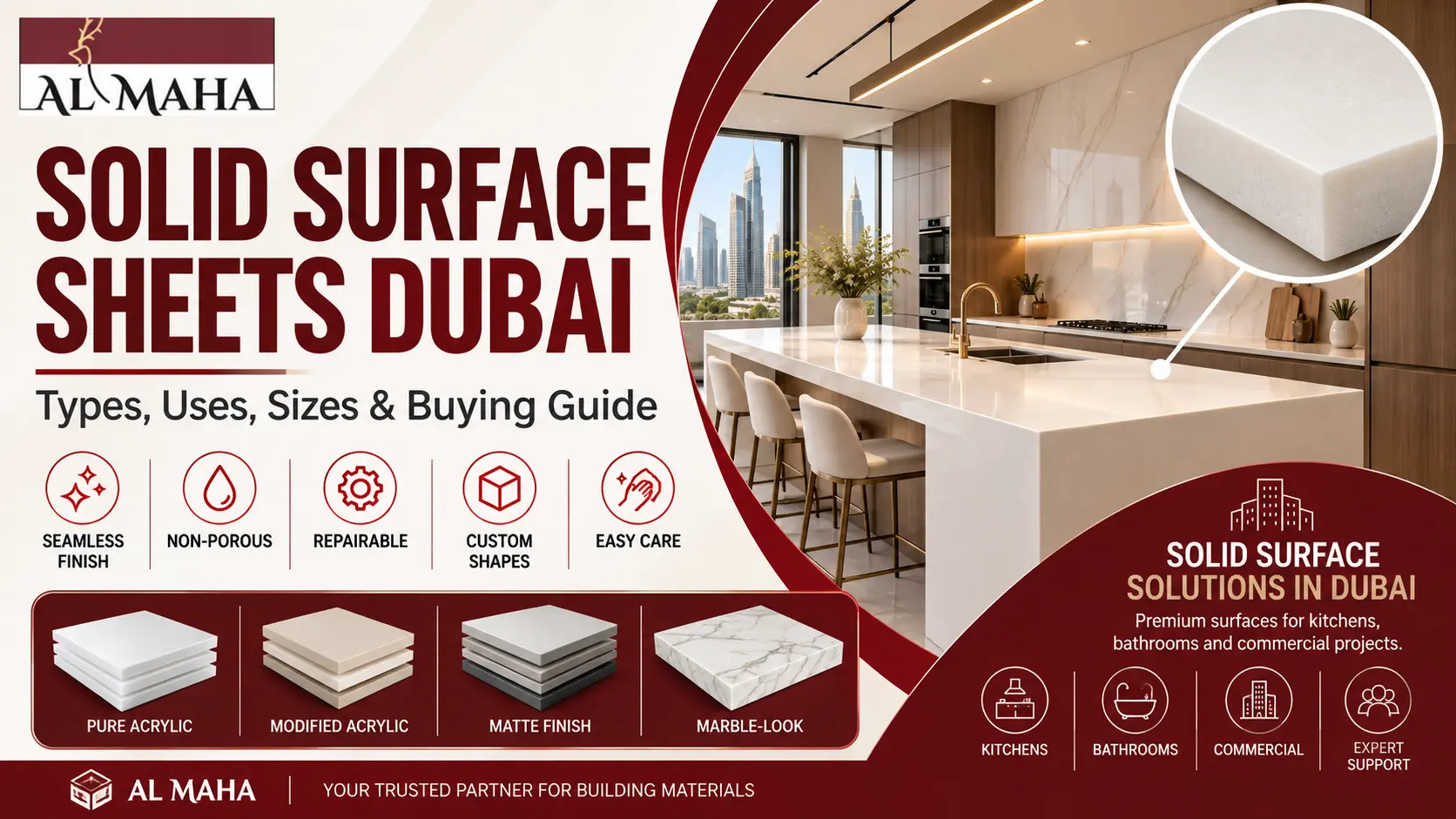
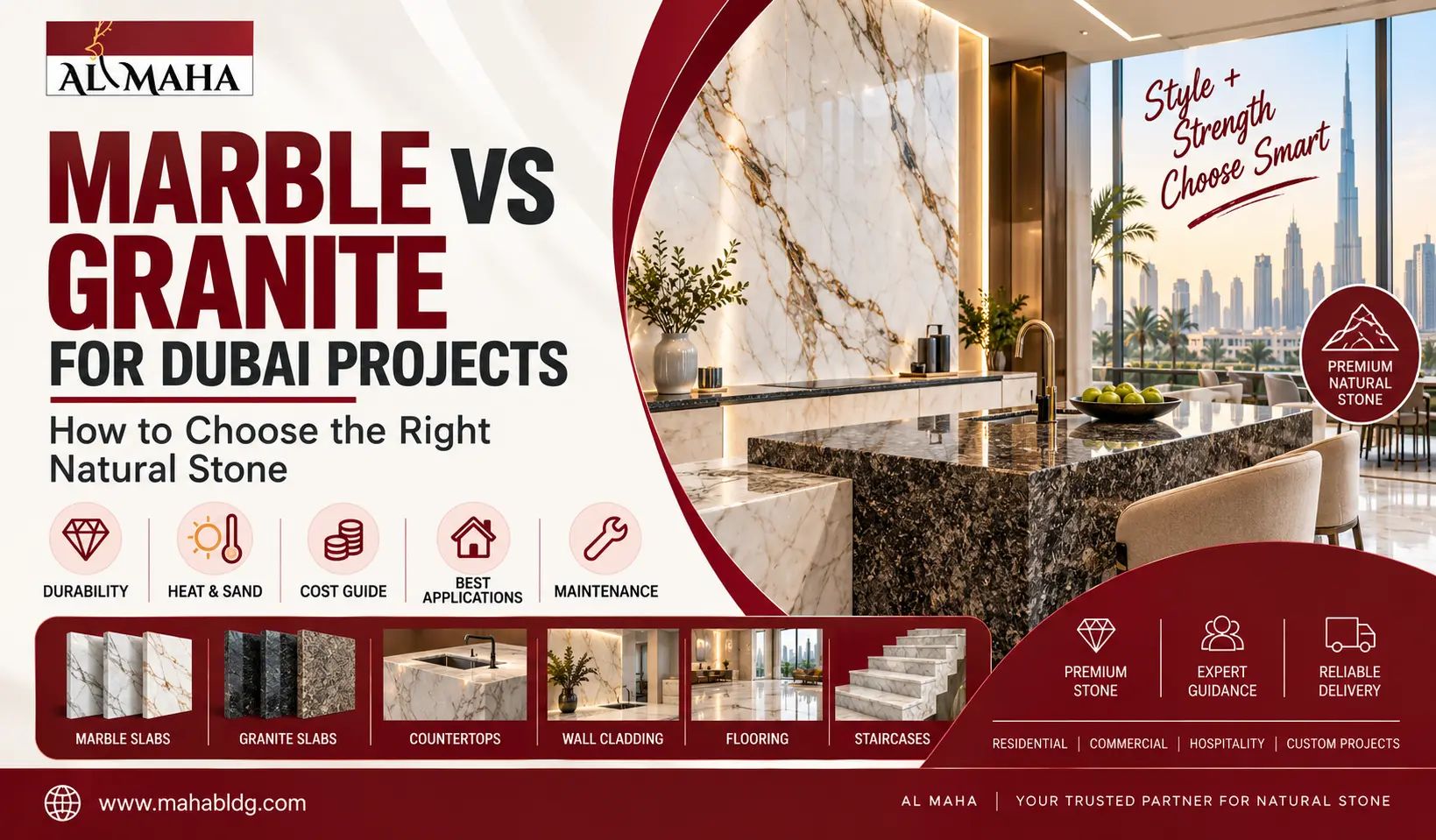
Our product range includes: Porcelain Tiles, Swimming Pool Tiles, Cladding Tiles with Fixing, Sanitary Ware, Roofing Materials, Marble & Granite , Solid Surface Filler & Sheets, and Interior Tiles Glue.
Our tile range covers different sizes, colours, finishes, patterns, and applications. For customers working on villas, apartments, commercial spaces, hospitality projects, or outdoor areas, selecting the right material requires consideration of both design and technical requirements. Al Maha can help customers explore suitable product options based on the application, project requirements, and desired design.
Frequently Asked Questions
Which type of tile is best for homes in Dubai?
Porcelain and ceramic tiles can both be suitable for residential interiors. The right choice depends on the room, application, design, maintenance requirements, and product specifications.
What is the best tile size for a living room?
600 × 600 mm, 600 × 1200 mm, 800 × 800 mm, and larger formats can all work well depending on the room size and layout.
Are porcelain tiles suitable for outdoor areas in Dubai?
Yes, porcelain tiles specifically designed and rated for outdoor applications can be suitable for patios, balconies, terraces, and other outdoor areas.
Are glossy tiles suitable for floors?
Glossy tiles can be used for selected flooring applications, but the surface characteristics and slip resistance should be checked before installation, particularly in wet areas.
How many extra tiles should I buy?
The required allowance depends on tile size, room shape, installation pattern, and cutting requirements. Your installer or supplier can help determine an appropriate quantity.
Are large-format tiles difficult to install?
Large-format tiles require careful handling, substrate preparation, adhesive coverage, alignment, and installation technique. Professional installation is recommended.
How do I choose a tile supplier in Dubai?
Compare product range, quality, availability, technical support, project experience, pricing, and delivery capabilities before selecting a supplier.
What tiles are best for commercial projects?
Commercial projects generally require tiles selected according to traffic, durability, maintenance, safety, design, and operational requirements.
Conclusion
Choosing the right tiles requires more than selecting a colour or design that looks attractive.
The material, application, size, finish, durability, maintenance requirements, installation conditions, and project budget all play an important role.
For residential projects, porcelain and ceramic tiles offer a wide range of design options for living rooms, kitchens, bedrooms, bathrooms, and other interiors. Outdoor and commercial projects require additional consideration of durability, safety, traffic, weather exposure, and maintenance.
A well-planned tile selection process can help reduce installation problems, unnecessary costs, and future maintenance challenges.
If you are planning a residential or commercial project in Dubai, explore the tile and building material solutions available from Al Maha Building Materials and use this Tile Buying Guide Dubai to narrow down the right options for your project.
 16 Oct, 2026