- By Admin
- Floor
Porcelain Tiles vs Ceramic Tiles: Which Is Better for Dubai Homes?
Selecting the right flooring or wall tiles is a long-term investment. Beyond enhancing the appearance of your home, tiles affect durability, maintenance, comfort, and overall property value. Among the most common options available today are porcelain and ceramic tiles. Although they look similar, they differ in composition, performance, and ideal applications.
For homeowners, architects, and contractors in Dubai, understanding these differences is essential. The city's hot climate, occasional humidity, and demand for durable building materials make tile selection even more important.
This guide explains the key differences between porcelain and ceramic tiles so you can choose the best option for your next residential or commercial project.
What Are Porcelain and Ceramic Tiles?
Porcelain and ceramic tiles are both made from natural clay, but their manufacturing processes are different. These differences directly impact their strength, water resistance, and lifespan.
Porcelain Tiles
Porcelain tiles are produced using highly refined clay and fired at much higher temperatures than ceramic tiles. This creates a dense material with exceptional strength and minimal water absorption.
Because of these characteristics, porcelain tiles are widely used in homes, commercial buildings, outdoor spaces, bathrooms, kitchens, balconies, and swimming pool areas where durability is essential.
Ceramic Tiles
Ceramic tiles are manufactured from natural clay that is fired at comparatively lower temperatures. As a result, they are lighter and slightly more porous than porcelain.
They are commonly chosen for indoor walls and residential spaces where foot traffic is moderate and extreme durability is not a primary concern.
Comparing Porcelain Tiles and Ceramic Tiles
Durability
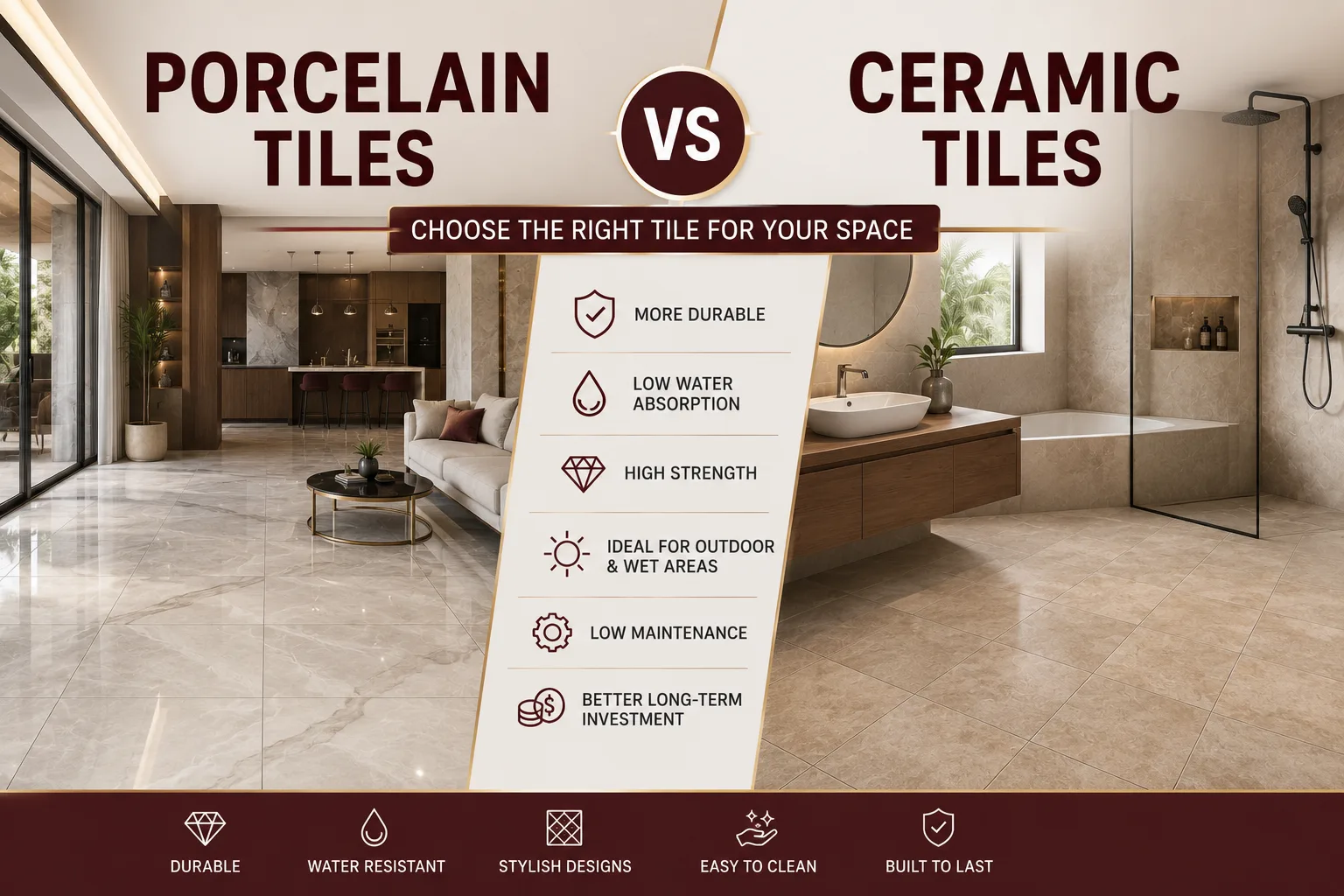
If strength is your top priority, porcelain tiles have a clear advantage.
Their compact structure makes them highly resistant to scratches, chips, cracks, and daily wear. This makes them suitable for busy homes as well as hotels, offices, shopping outlets, and other commercial environments.
Ceramic tiles offer good durability for standard residential use but may be more susceptible to damage from heavy impacts.
Water Resistance
Moisture resistance is especially important in areas such as bathrooms, kitchens, balconies, and outdoor spaces.
Porcelain tiles absorb very little water due to their dense composition, making them an excellent option for wet environments.
Ceramic tiles have higher water absorption and are generally recommended for dry indoor locations.
Performance in Dubai's Weather
Dubai's climate demands materials that can tolerate prolonged exposure to heat and sunlight.
Porcelain tiles retain their colour, finish, and structural integrity even in challenging outdoor conditions. They are ideal for:
Outdoor terraces
Balconies
Garden pathways
Pool decks
Building entrances
Ceramic tiles perform well inside homes but are typically better suited for interior installations.
Maintenance
Both porcelain and ceramic tiles are relatively simple to maintain.
Routine sweeping and occasional mopping are usually sufficient to keep them clean. However, porcelain tiles are naturally more stain-resistant because they absorb less moisture, making them especially suitable for kitchens, restaurants, and high-traffic commercial areas.
Design and Appearance
Advancements in tile manufacturing have expanded the range of available designs for both porcelain and ceramic products.
Modern collections can accurately replicate the appearance of:
Granite
Natural stone
Timber
Concrete
Terrazzo
Large-format porcelain tiles have become particularly popular for creating seamless interiors with fewer grout lines and a premium contemporary finish.
Cost Considerations
Ceramic tiles generally cost less initially, making them attractive for budget-conscious projects.
Porcelain tiles usually require a higher upfront investment, but their superior durability and longer lifespan often result in lower replacement and maintenance costs over time. For many property owners, this makes porcelain the more economical choice in the long run.
Best Tile Choices for Different Spaces
Living Areas
Porcelain tiles are an excellent option for living rooms because they combine elegance with exceptional resistance to everyday wear.
Kitchens
Kitchen floors experience constant movement, spills, grease, and moisture. Porcelain tiles provide excellent stain resistance and are easy to maintain, making them one of the best choices for these spaces.
Bathrooms
Bathrooms require flooring that can handle continuous exposure to water.
Porcelain tiles are generally preferred because of their low water absorption and long-lasting performance.
Bedrooms
Both porcelain and ceramic tiles can work well in bedrooms. The ideal choice depends on your preferred style, budget, and overall interior design.
Outdoor Spaces
Outdoor flooring must withstand sunlight, changing temperatures, and moisture.
Outdoor-grade porcelain tiles are specifically designed for these conditions and continue to perform well while maintaining their appearance for many years.
Why Homeowners in Dubai Prefer Porcelain Tiles
Porcelain tiles have become one of the most popular flooring solutions in Dubai due to their balance of aesthetics and functionality.
Some of their biggest advantages include:
Outstanding durability
Minimal water absorption
Excellent heat resistance
Strong scratch resistance
Simple maintenance
Long service life
Wide variety of colours, textures, and finishes
Suitable for both residential and commercial developments
These qualities make porcelain tiles a practical investment for modern construction projects.
Tips for Choosing the Right Tile
Before selecting tiles, consider a few important factors:
Where will the tiles be installed?
Will the area experience heavy daily use?
Is moisture resistance a priority?
Are the tiles intended for indoor or outdoor use?
Do you prefer a premium natural stone appearance?
What level of maintenance are you comfortable with over the long term?
Evaluating these questions will help you select tiles that match both your functional requirements and design vision.
Why Choose Al Maha Building Materials?
Al Maha Building Materials supplies premium porcelain tiles, ceramic tiles, outdoor tiles, swimming pool tiles, sanitary ware, marble, granite, natural stone, and a complete range of building materials for residential and commercial developments across Dubai.
Our carefully curated collections combine quality craftsmanship with modern designs to suit villas, apartments, hotels, retail spaces, offices, and large construction projects.
Whether you are renovating a single room or managing a complete property development, our experienced team can recommend tile solutions that align with your design preferences, performance needs, and budget.
Final Thoughts
Both porcelain and ceramic tiles offer unique advantages, and the right option depends on your specific project.
Ceramic tiles are a practical solution for interior walls and areas with light to moderate foot traffic. However, if you require exceptional durability, low maintenance, superior moisture resistance, and reliable long-term performance, porcelain tiles are the better choice, particularly for properties in Dubai.
Choosing premium-quality tiles today can enhance your property's appearance, minimise maintenance expenses, and provide lasting value for years to come.
 16 Oct, 2026