- By Admin
- Floor
Marble vs Granite for Dubai Projects: How to Choose the Right Natural Stone
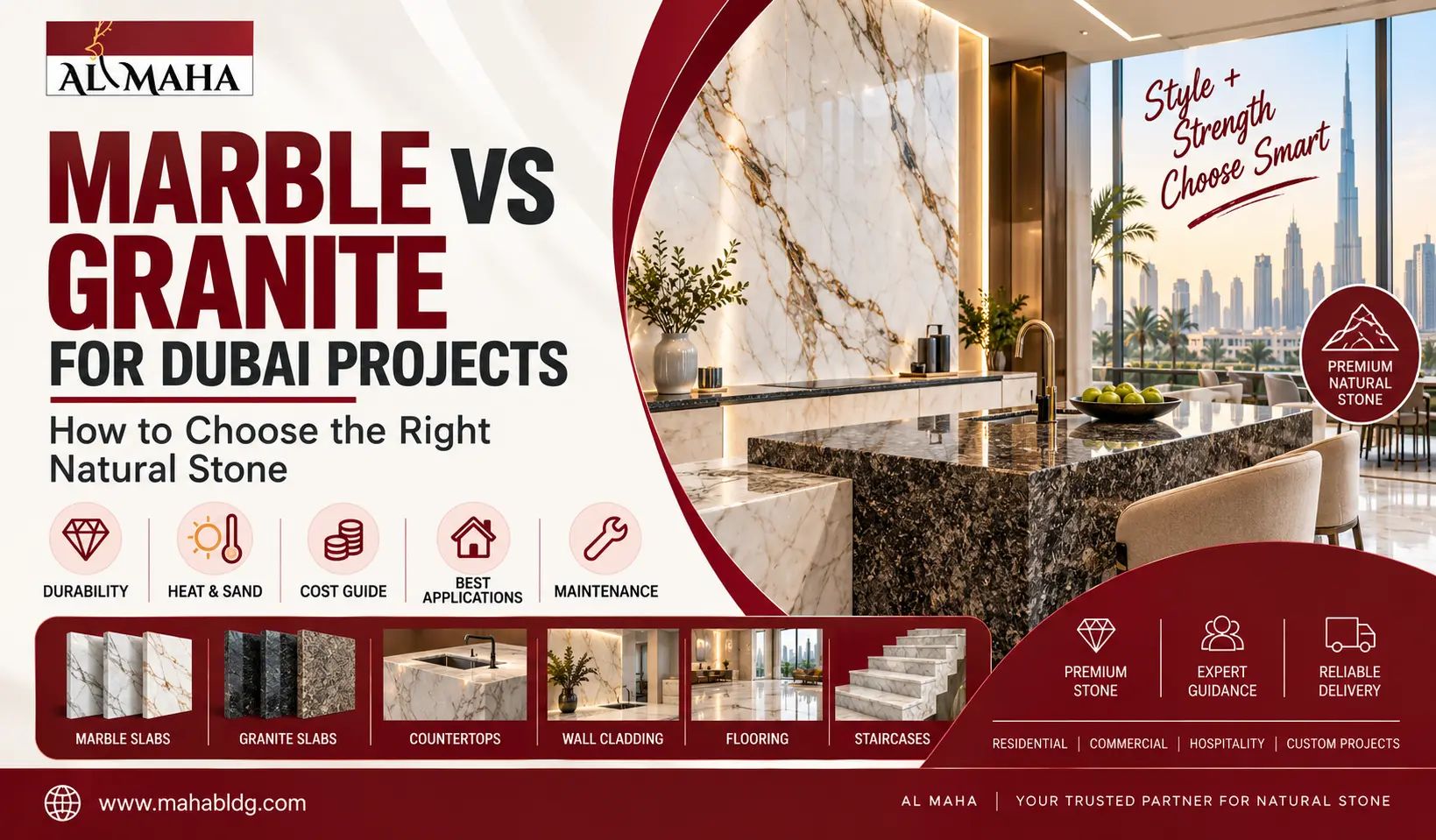
Choosing between marble and granite in Dubai is about more than looks. Your stone has to handle 45°C summers, humidity, fine desert sand, heavy AC cycling and daily use. This guide compares both stones for Dubai conditions, covers the Dubai-specific factors most guides skip, and explains how to choose among marble and granite suppliers before you place an order.
Quick Answer: Marble or Granite?
Factor | Marble | Granite |
Mohs hardness | ~3–4 | ~6–7 |
Look | Soft veining, luxury feel | Granular, speckled, consistent |
Best for | Majlis, foyers, feature walls, bathrooms | Kitchens, patios, entrances, facades, high-traffic areas |
Stain and acid resistance | Etches easily | Highly resistant |
Sealing cycle (indicative) | Every 6–12 months | Every 18–24 months |
Indicative price | AED 220–950+/m² | AED 160–650/m² |
Prices are indicative market ranges. Slab origin, grade and finish drive the final quote, so confirm with your supplier.
Rule of thumb: use marble where appearance matters most and traffic is light. Use granite where durability matters most. Many Dubai projects use both.
Marble vs Granite: The Technical Differences That Matter
Hardness. Granite (Mohs 6–7) resists scratches and abrasion far better than marble (Mohs 3–4). That gap decides where each stone belongs.
Porosity and staining. Marble is calcium-carbonate based, so acids like lemon juice, vinegar and some cleaners etch the surface. Granite is denser and far more resistant, though it still needs sealing.
Heat tolerance. Both handle heat well, but granite copes better with hot cookware and direct sun. Marble is best kept out of high-heat cooking zones.
Appearance. Marble has flowing veins, translucency and light reflectance that suit formal interiors. Granite has crystalline, speckled patterns and looks more uniform across slabs.
Dubai Climate and Infrastructure: The Factors Most Guides Skip
AC thermal shock. Interiors are often cooled to a low temperature while ambient heat and humidity stay extreme, especially near entrances and glazed façades. Soft marble installed without proper expansion joints is more prone to micro-cracking. Good movement joints and a properly prepared substrate matter as much as the stone itself. Our guides on preventing cracked porcelain tiles and preparing the floor before installation apply the same principles.
Fine desert sand. Sand tracked indoors acts like sandpaper on soft polished surfaces. Marble dulls faster near entrances, terraces and balcony doors. Use entrance matting, or choose honed marble or granite for those zones.
Outdoor exposure. Direct sun, humidity and temperature swings punish soft stone. For patios, driveways and outdoor steps, granite is usually the safer choice. See our outdoor tiles guide for Dubai for alternatives.
Where to Use Marble vs Granite in Dubai Projects
Marble is ideal for:
Formal majlis and reception areas
Entrance foyers and lobbies (with matting)
Feature walls and bookmatched slabs
Master bathrooms and vanity tops with low daily abuse
Granite is ideal for:
Kitchen countertops and islands
Outdoor patios, steps and pool surrounds
Building entrances and high-traffic commercial corridors
Exterior cladding, subject to engineering review
If you are weighing stone against other options, read our comparison of porcelain vs ceramic tiles in Dubai. Large-format porcelain can also give a marble look with lower maintenance. See large-format porcelain tiles in Dubai and our porcelain range.
Marble Tiles vs Granite Tiles vs Full Slabs
Tiles (standard sizes) are faster and cheaper to install, and easier to replace. They suit floors, walls and stair risers.
Slabs give a seamless look for countertops, bookmatched feature walls and vanity tops, but need precise fabrication.
If you are searching for a marble tiles company or granite tiles supplier, ask about tile thickness tolerance, calibration and batch shading. Buy all material for one area from the same batch.
Cost of Marble and Granite in Dubai (AED)
Your total cost has three parts:
Stone or slab price: varies by origin, grade and finish.
Fabrication: cutting, edge profiles, polishing and cut-outs.
Installation: adhesive, substrate prep, grouting and sealing.
Do not compare only the per-m² material price. Cheaper stone with inconsistent thickness or poor calibration can raise installation cost. Our tile buying guide for Dubai and floor tiles buying guide explain how to compare quotes properly.
How to Choose the Best Marble Supplier in Dubai
A good best marble supplier should:
Show physical samples and, where possible, the actual slabs or a batch photo
Confirm origin, grade, finish and thickness in writing
Provide technical data and test information for larger or commercial jobs
Have consistent stock, or clear lead times for imported material
Offer the right adhesives and fixing products, so you don't mix incompatible materials
Offer clear after-sales support
Our article on how to choose the best tile supplier in Dubai covers the same checks in more detail.
Marble and Granite Suppliers in Dubai: Local Stock vs Direct Import
Local stock: faster delivery, viewable samples and easier replacements. Best for residential and fit-out projects on a schedule.
Direct import: wider choice of premium Italian and Turkish marbles, but longer lead times, shipping risk and minimum quantities. Best for large or highly specific design requirements.
Many Dubai projects combine both: imported feature stone for hero areas, locally stocked stone elsewhere.
Granite and Marble Wholesale Suppliers: What Contractors Should Ask
If you are looking for granite and marble wholesale suppliers for a villa cluster, tower or fit-out project, ask about:
Volume pricing and staged deliveries
Batch consistency across the whole order
Wastage allowance (order extra for cuts and breakage)
Packing and handling standards to reduce breakage
Delivery scheduling to site
Replacement stock for future repairs
For wider material planning, see our building materials in Dubai guide.
Granite Stone Suppliers Near Me: How to Search Smartly
When people search granite stone suppliers near me or marble and granite suppliers near me, proximity is only part of the story. Before visiting a showroom or warehouse:
Shortlist by product range: marble, granite and matching installation materials.
Ask for slab or tile samples in your intended finish.
Confirm stock availability and lead time in writing.
Check whether they can supply fixing and cladding materials. See our cladding tiles fixing page and interior tiles glue range.
You can browse our marble and granite range or the full product categories.
Installation, Adhesives and Sealing
Natural stone fails most often through installation, not the stone itself.
Substrate: must be flat, clean and cured. Uneven bases cause lippage and cracks.
Adhesive: use one suited to natural stone. Pale marble can stain if the wrong adhesive is used. See our porcelain tile adhesive guide for the principles.
Movement joints: include them in large floors and where the stone meets different structural elements.
Grout: choose colour and type to suit the stone. See the grout guide.
Sealing: apply an impregnating sealer before use, then reseal on schedule. Marble needs it more often than granite.
Finish: polished, honed or brushed finishes affect slip resistance and stain visibility. Read our tile finish guide.
Maintenance: Marble vs Granite Care
Marble:
Use pH-neutral cleaners only, never vinegar or acidic products
Wipe spills promptly
Reseal more frequently
Re-polish if etching occurs
Granite:
Clean with mild soap and water
Reseal every 18–24 months (indicative)
Avoid harsh abrasives
Facades, Cladding and Compliance in Dubai
Exterior stone cladding on mid- and high-rise buildings involves wind loads, anchor systems, fixing details and authority approvals. Requirements depend on the project, so confirm with your consultant and the relevant authorities, such as Dubai Municipality and Civil Defense, before specifying. Do not assume interior-grade stone or adhesives are suitable for façades.
Marble vs Granite for Property Value
Premium marble can add visual prestige in luxury residences and hospitality projects. Granite adds durability and lower running costs in kitchens, outdoor areas and commercial spaces. Buyers and appraisers respond to finish quality and condition, so a well-maintained mid-range stone often outperforms neglected premium stone.
Frequently Asked Questions
Is marble or granite better for Dubai homes?
Granite suits kitchens, outdoor areas and busy zones. Marble suits formal, lower-traffic areas. Many homes use both.
Can marble be used outdoors in Dubai?
Some marbles can, but heat, humidity and sand make granite the safer choice for most outdoor areas.
How often should I seal marble and granite?
Indicative guidance is every 6–12 months for marble and 18–24 months for granite, depending on use and product.
Where can I find marble and granite suppliers in Dubai?
Look for suppliers with physical samples, clear specifications, stock transparency and installation materials. Browse our marble and granite range or contact us with your project details. You can also learn more about Al Maha.
Which is more expensive in Dubai, marble or granite?
Marble usually costs more, especially premium Italian varieties like Calacatta and Statuario, and indicative ranges reach AED 950+/m² against about AED 650/m² for granite at the top end. Fabrication, thickness and finish affect the final price, so compare full quotes rather than the stone price alone. Our tile buying guide for Dubai explains how.
Is granite better than marble for kitchen countertops?
In most cases, yes. Granite resists heat, scratches and acid stains better than marble, which makes it the practical choice for busy kitchens. Marble works if you accept some etching and patina over time, or restrict it to a baking area or island.
Can marble be used in bathrooms?
Yes, especially on walls, vanity tops and feature areas. On floors and shower areas, choose a honed or anti-slip finish and seal regularly. For fixtures to pair with your stone, see our sanitary ware range and our guide to luxury bathroom design ideas.
Does granite need sealing?
Yes, though less often than marble. Sealing reduces staining from oils and liquids. Indicative guidance is every 18–24 months, depending on the stone and how much it is used.
What is the difference between polished, honed and brushed stone?
Polished stone is glossy and reflective, but shows scratches and can be slippery when wet. Honed stone has a soft matte look and hides wear better. Brushed finishes add texture and grip, which suits outdoor and wet areas. See our tile finish guide for more.
Which stone is better for outdoor areas in Dubai?
Granite is generally the safer choice for patios, steps and driveways because it handles heat, sun and sand abrasion better than marble. For pool areas, check slip resistance and see our swimming pool tiles options. Our outdoor tiles guide covers other options.
Is marble suitable for high-traffic commercial spaces?
It can be, but it needs a strong maintenance plan, entrance matting and regular polishing. For corridors, lobbies with heavy foot traffic and retail areas, granite or large-format porcelain often lasts longer with less upkeep. Read about large-format porcelain tiles in Dubai.
What should I ask a marble and granite wholesale supplier before ordering?
Ask about batch consistency, thickness tolerance, packing standards, wastage allowance, lead times and replacement stock. For large projects, ask for written specifications and samples that match the delivered batch. Our guide on choosing a tile supplier in Dubai has a full checklist.
Can I buy marble and granite tiles and slabs from the same supplier?
Yes, and it often helps. One supplier can keep colours, finishes and installation materials consistent across floors, walls and countertops. Browse our marble and granite collection or the wider product categories.
What adhesive should I use for marble and granite?
Use an adhesive specified for natural stone. Some adhesives can stain light marble, and large or heavy slabs need the right bonding strength and application method. See our interior tiles glue range and the adhesive guide for the basics, and confirm the exact product for stone with your supplier or installer.
Is porcelain a good alternative to marble or granite?
For many projects, yes. Porcelain offers marble-look and stone-look designs with lower maintenance, higher stain resistance and no regular sealing. Natural stone still has a character and value that porcelain cannot fully match. Compare in our porcelain tiles in Dubai guide or best porcelain tiles.
 20 Oct, 2026